



Housing inequality is deepening across the European Union as rising prices, higher rents and escalating living costs strain household budgets and widen gaps between countries and regions. Eurostat’s 2025 data confirm mounting pressure on urban — and especially vulnerable — households.
As EU Commissioner Dan Jorgensen noted ahead of the bloc’s forthcoming affordable housing plan, the crisis has reached a point “where people with ordinary jobs and incomes can no longer live in many cities because it’s simply too expensive.”
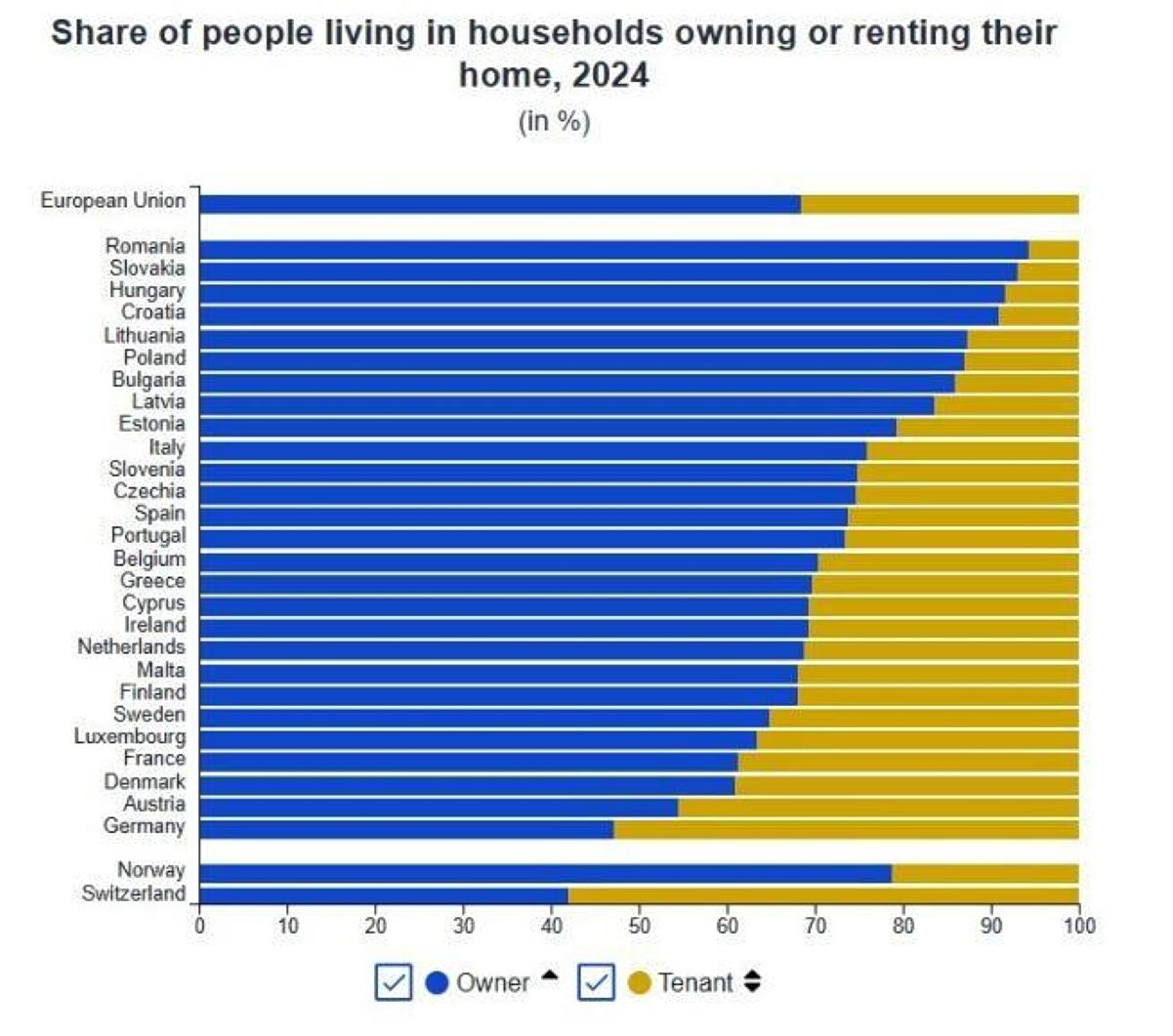
Beyond soaring property prices, the figures reveal sharp disparities in housing conditions — from size and type to quality and ownership. In 2024, 68% of EU residents owned their homes and 32% rented, with Romania, Slovakia, Hungary and Croatia showing the highest ownership rates. Germany was the only member state where renting was more common.
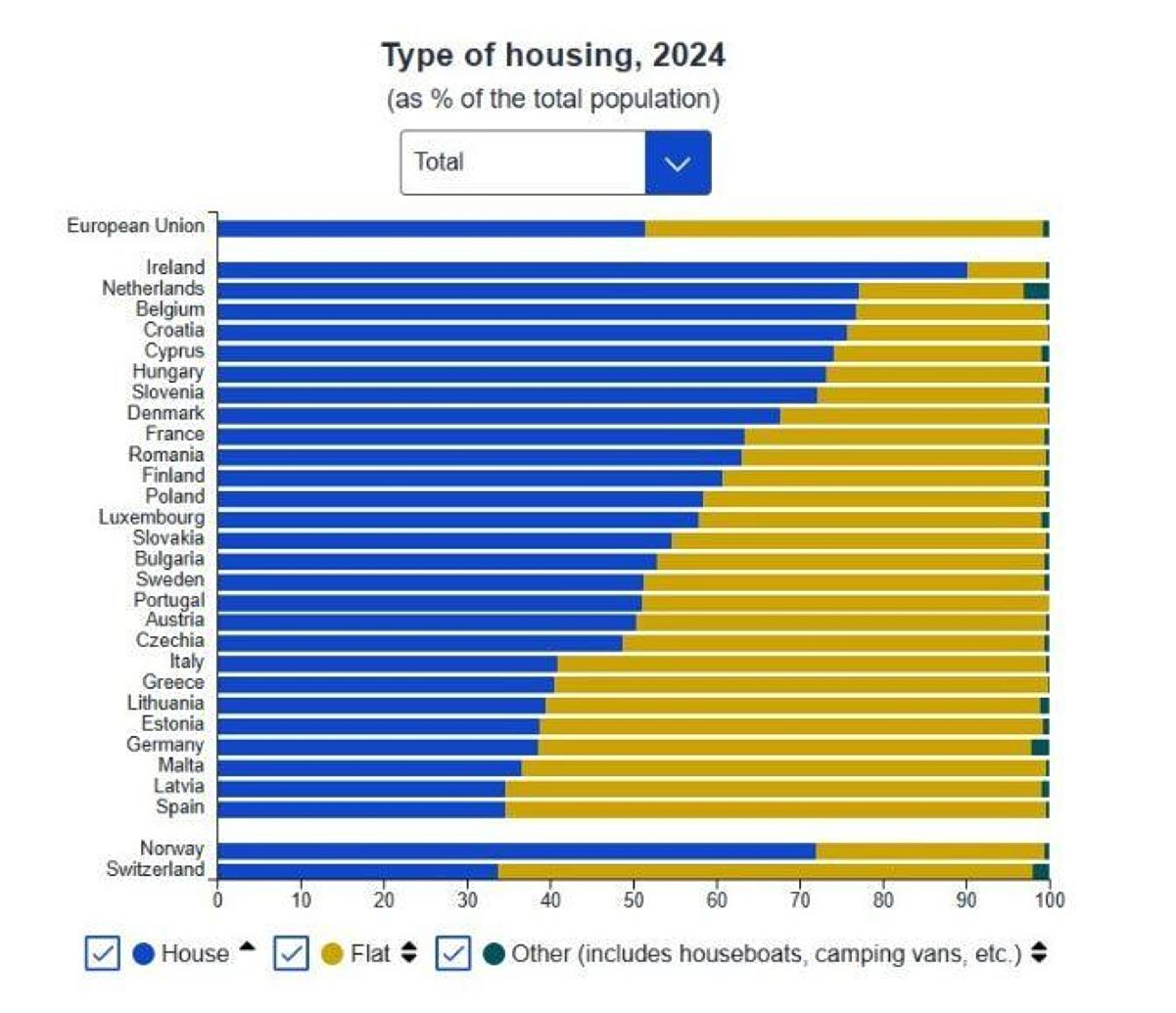
Housing types also vary widely: 51% of Europeans lived in detached houses in 2024, 48% in apartments. Urban residents overwhelmingly lived in apartments (73%), while 83% of those in rural areas lived in houses. Ireland recorded the highest share of people in detached homes, while Spain, Latvia and Malta led in apartment living.
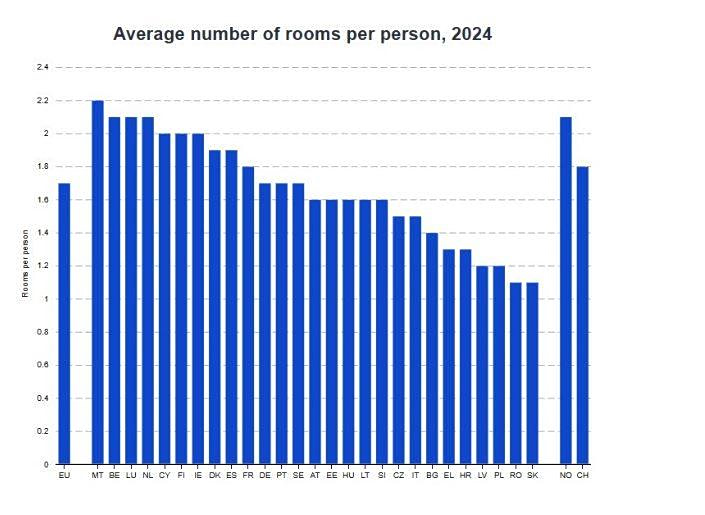
Living space is another dividing line. The EU average stood at 1.7 rooms per person, ranging from 2.2 in Malta to 1.1 in Slovakia and Romania. Household size also differed significantly, from 3.1 people per household in Slovakia to just 1.9 in Finland and Lithuania.
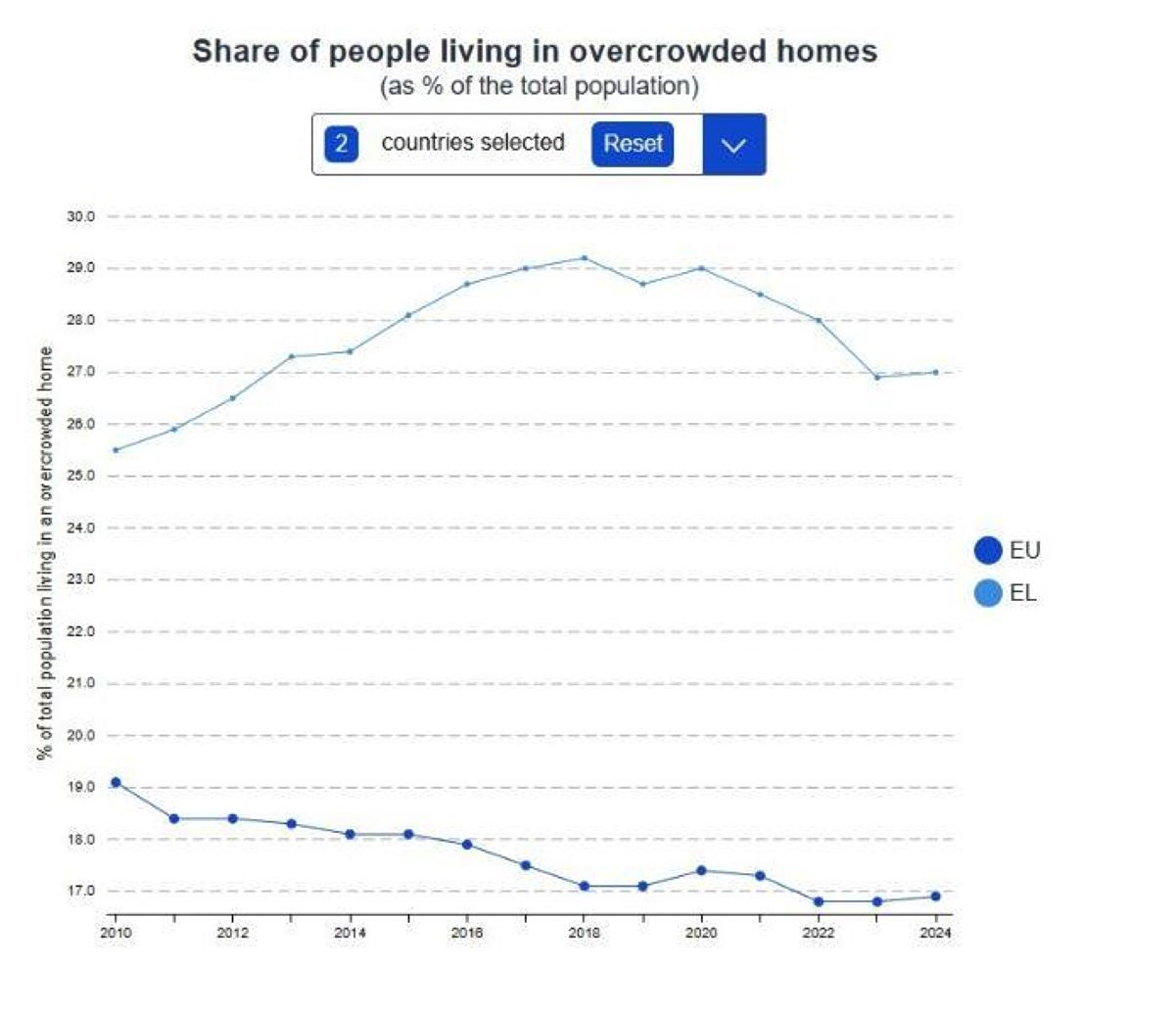
Quality disparities persist: 17% of EU residents lived in overcrowded housing in 2024, with rates peaking in Romania, Latvia and Bulgaria. Conversely, 33% lived in under-occupied homes, especially in Cyprus, Ireland and Malta, often due to older adults staying in family homes after children move out.
Discrimination adds another layer of inequality. Nearly 6% of Europeans searching for housing reported facing discrimination in the previous five years, with rates doubling among those at risk of poverty.
Affordability remains the most pressing challenge. In 2024, almost 10% of urban dwellers lived in households spending more than 40% of their income on housing — a burden most acute in Greece and Denmark. Across the EU, housing absorbed an average of 19% of disposable income, reaching 36% in Greece and just 11% in Cyprus.