
Eight in ten Greek companies are active in international trade—well above the EU average—while their pace of innovation is broadly aligned with European trends, according to the European Investment Bank’s 2025 Investment Survey for Greece. The findings suggest that, despite geopolitical and economic headwinds, Greek businesses remain resilient and cautiously optimistic.
The survey shows that 76% of firms invested during the previous financial year, slightly below the EU average of 86%. Yet expectations for future investment are more upbeat: 14% of Greek companies plan to increase spending, compared with just 4% across the EU. Most investment (73%) went into fixed assets, with 7% directed to R&D, mirroring the European benchmark.
Global Activity and Adaptability
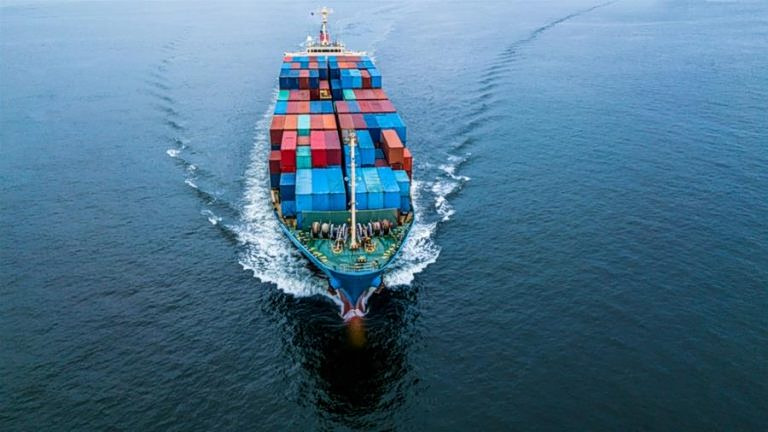
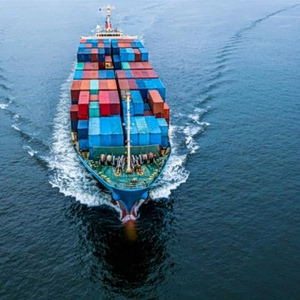
A striking 81% of Greek firms engage in international trade. Manufacturing leads with 93% participation, followed closely by large enterprises at 91%. Despite changes in customs rules, tariffs, and certification requirements, businesses appear to be adjusting effectively.
Climate Pressures and Sustainability Efforts
Climate risks are rising, with 63% of firms reporting exposure to physical threats. Yet over half see no immediate gains from stricter environmental standards—well above the EU average.
Still, many are taking action: 28% have adaptation strategies, 38% have invested in energy efficiency, 84% pursue carbon-reduction measures (recycling, sustainable transport, efficient energy use), 58% have completed energy audits, and one-third have set emissions-reduction targets.
Innovation and Digital Adoption
Thirty percent of Greek firms invest in new products, processes, or services, a figure close to the EU average. Digital adoption stands at 56%—notably below the EU’s 77%—while AI use reaches 19% among SMEs and 27% among large firms, mostly for internal operations and sales or marketing.
Barriers, Financing, and Gender Equality
High energy costs, skills shortages, future uncertainty, and administrative burdens remain major obstacles. Access to finance is also more challenging than elsewhere in Europe, affecting 13.5% of firms. Most companies (73%) rely on internal funds, while 27% benefit from support schemes.
Greece stands out in gender representation: 34% of firms have at least 40% women in senior management, and 22% are majority female-owned—both above the EU average.
Source: tovima.com


![Ακίνητα: Άνοδος στις «off-market» πωλήσεις – Οι περιοχές [πίνακας]](https://www.ot.gr/wp-content/uploads/2026/03/ot_athinaiki_riviera1-1024x600-2.jpg)