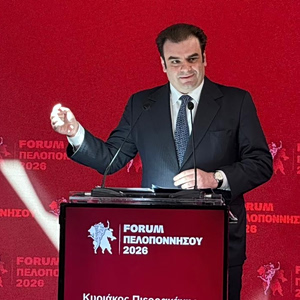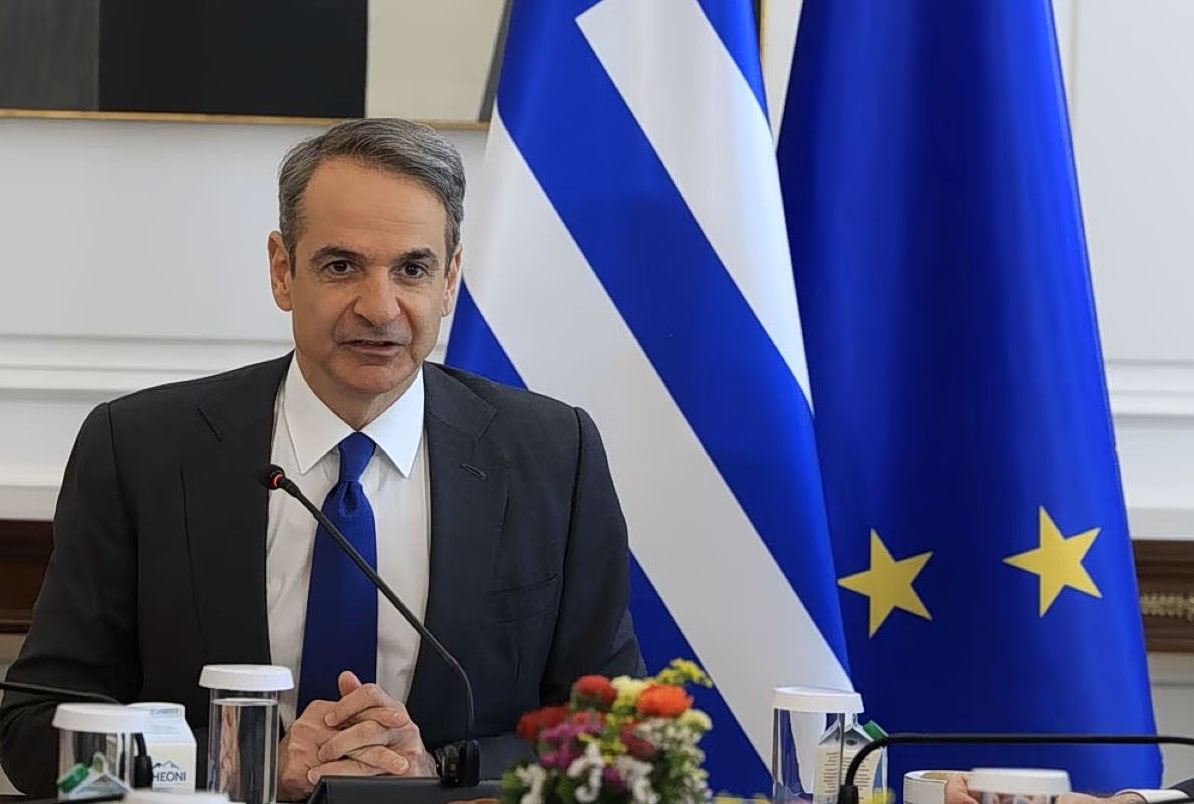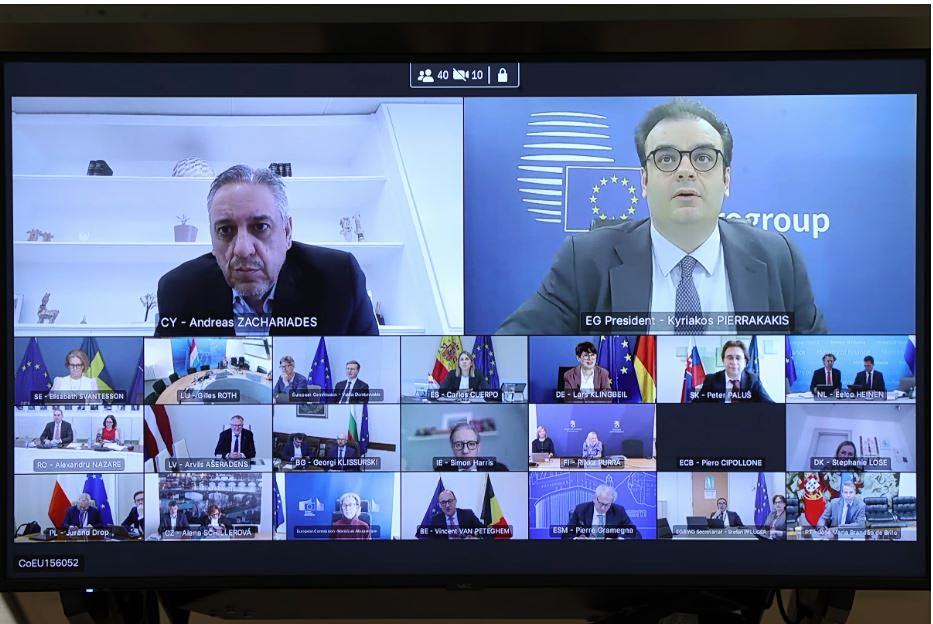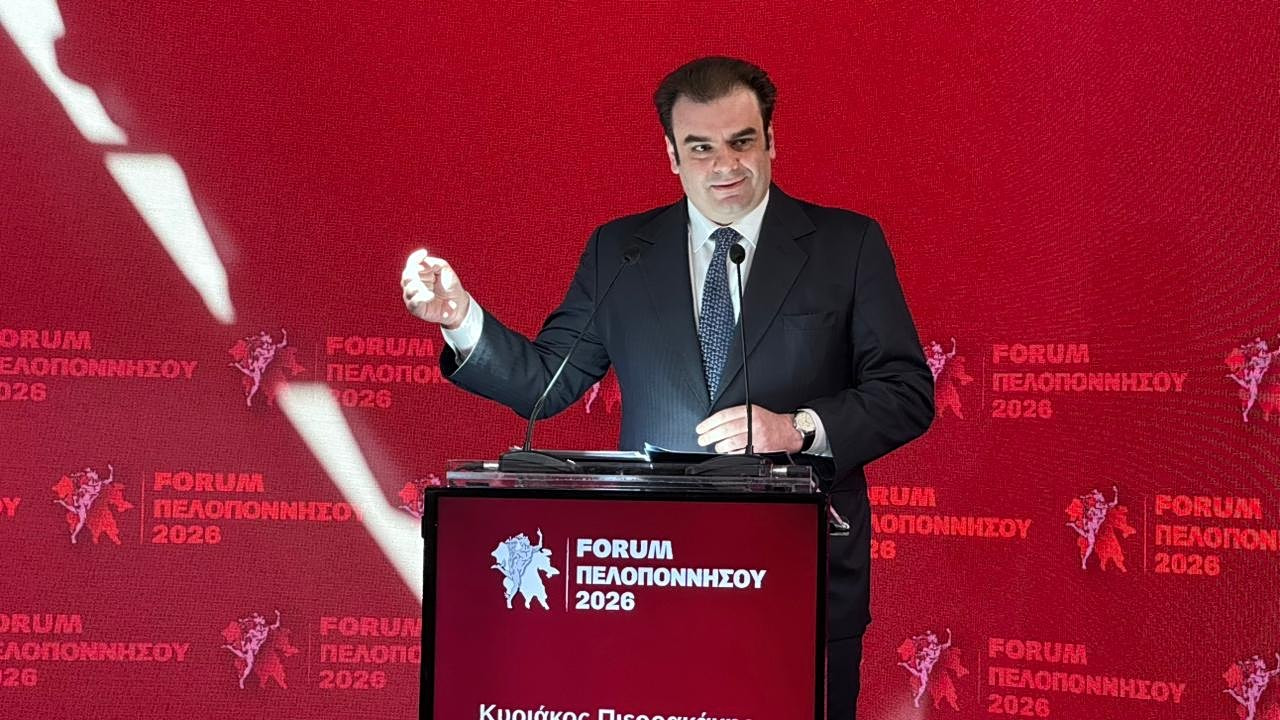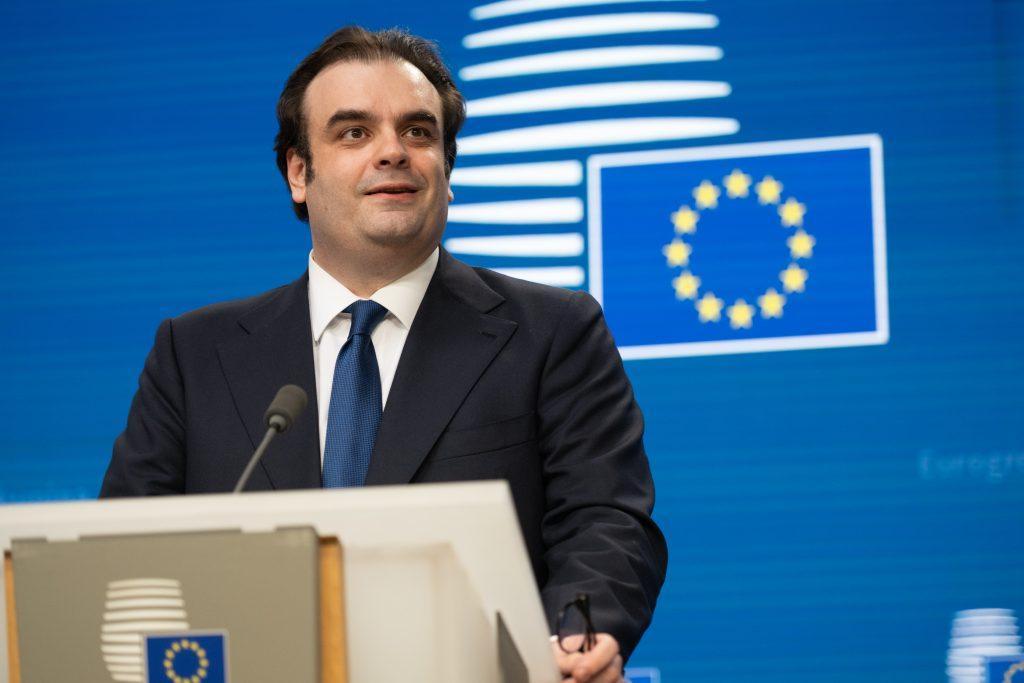



Attention is focused on Brussels on Monday as the Eurogroup holds its first meeting under the presidency of Greek Finance Minister Kyriakos Pierrakakis. The session marks a symbolic moment, not only as Pierrakakis chairs the body for the first time, but also due to the strong Greek presence, with Deputy Finance Minister Thanos Petralias also taking part.
The meeting takes place against a complex international backdrop. In recent days, Washington unexpectedly raised the prospect of escalating tariffs on European countries, a move linked to renewed tensions surrounding Greenland. This development prompted an emergency coordination meeting among EU ambassadors in Brussels, aimed at shaping a unified European response before economic policy decisions are taken.
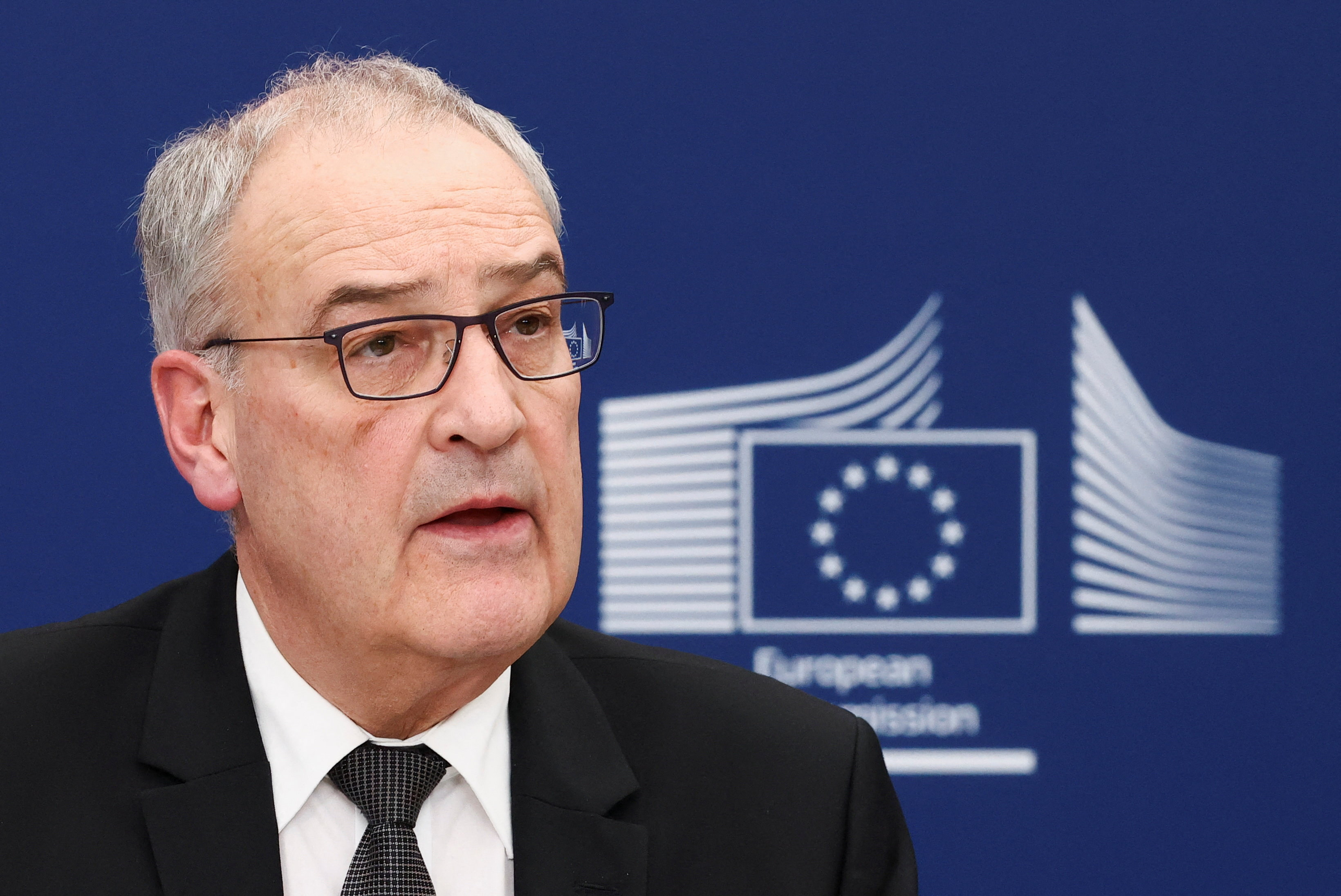
At the core of the Eurogroup’s agenda is the appointment of a new Vice-President of the European Central Bank, as the term of the current officeholder, Luis de Guindos, expires at the end of May. The decision is seen as crucial for the future direction of eurozone monetary policy.
Alongside the Eurogroup, the first ECOFIN meeting of 2026 will address a broad range of financial and fiscal issues. Ministers will be briefed by the Cypriot Presidency on efforts to advance the EU’s Savings and Investments Union, the Capital Markets Union, and the Banking Union. Budgetary discussions will include preparations for Council recommendations on the implementation of the EU budget for 2024, as well as guidelines for the 2027 budget.
Tax policy will also feature prominently, with initiatives focused on tax simplification and the revision of EU rules on tobacco taxation. Modernisation of the EU Customs Union is identified as a key priority, while efforts will continue to ensure the successful completion of the Recovery and Resilience Facility.
During the session, finance ministers are expected to approve conclusions on the Alert Mechanism Report, which signals the start of the macroeconomic imbalance procedure under the European Semester. They will also exchange views on the economic and financial impact of Russia’s invasion of Ukraine. In this context, the European Council has agreed to provide a €90 billion loan to Ukraine for the period 2026–2027, backed by the EU budget.