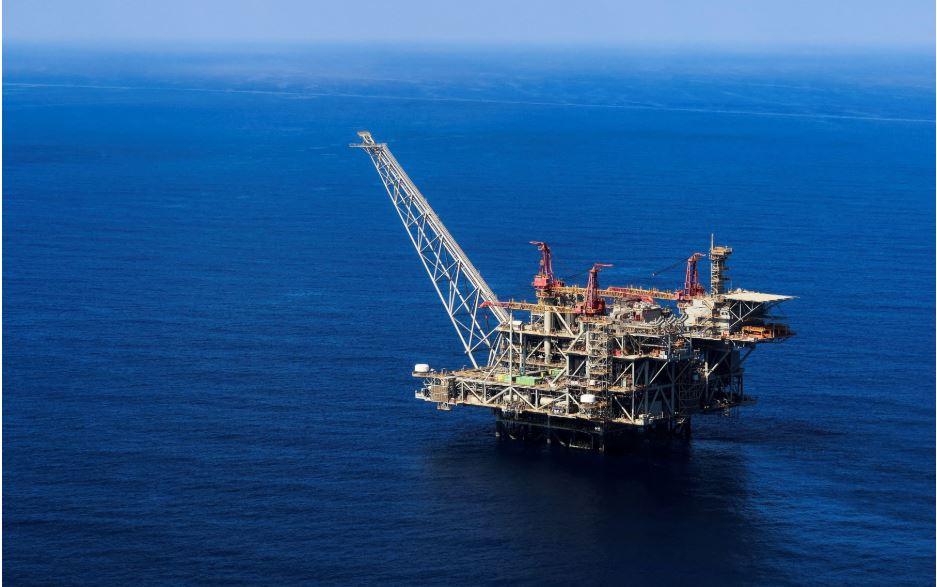


Chevron Corp. will sign agreements Monday Feb. 16, granting it rights to explore and potentially exploit hydrocarbons in four offshore blocks in Greece, marking one of the most significant entries by a U.S. energy major into the country’s upstream sector in recent years.
The contracts, scheduled to be signed at noon at the Acropolis Museum in Athens, follow Chevron’s victory last October in a tender conducted by the Hellenic Hydrocarbons and Energy Resources Management Company (HEREMA).
Four Offshore Blocks South of Crete and Peloponnese
Under the agreements, Chevron will explore for potential natural gas deposits in the offshore blocks “South of the Peloponnese,” “A2,” “South of Crete I” and “South of Crete II.” The company was the sole bidder for the four concessions, alongside minority partner HELLENiQ ENERGY.
Two of the areas border blocks already held by ExxonMobil west and southwest of Crete, underscoring the growing presence of U.S. companies in Greek offshore exploration.
The combined area spans roughly 47,000 square kilometers.
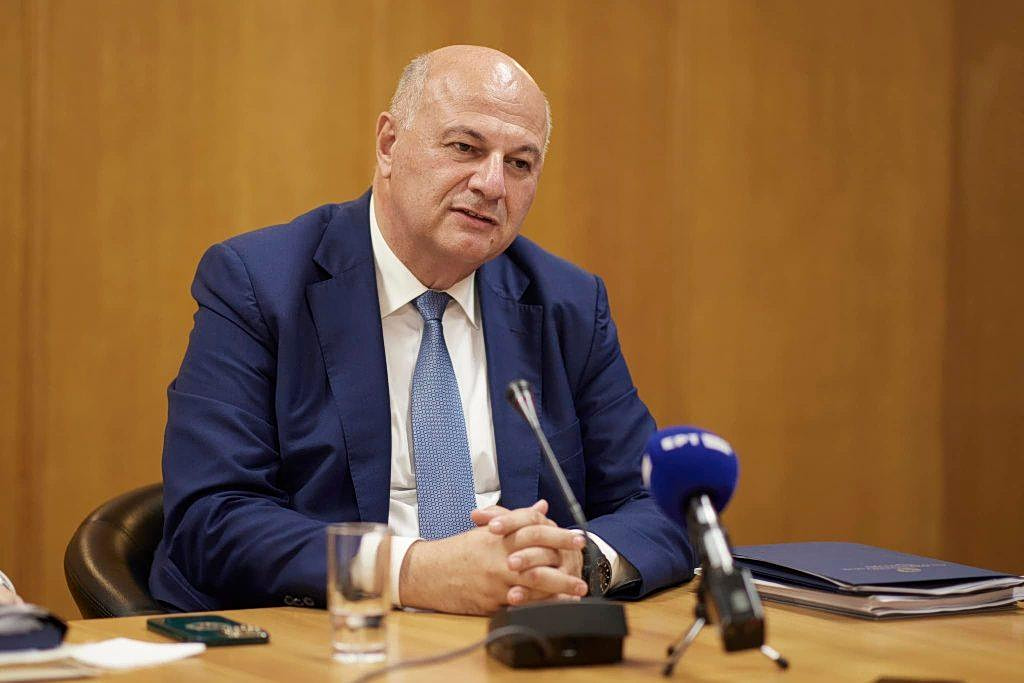
The agreements will be signed on behalf of the Greek state by Environment and Energy Minister Stavros Papastavrou and HEREMA CEO Aris Stefatos. Chevron will be represented by Gavin Lewis, vice president of Global New Ventures, and HELLENiQ ENERGY by CEO Andreas Shiamishis.
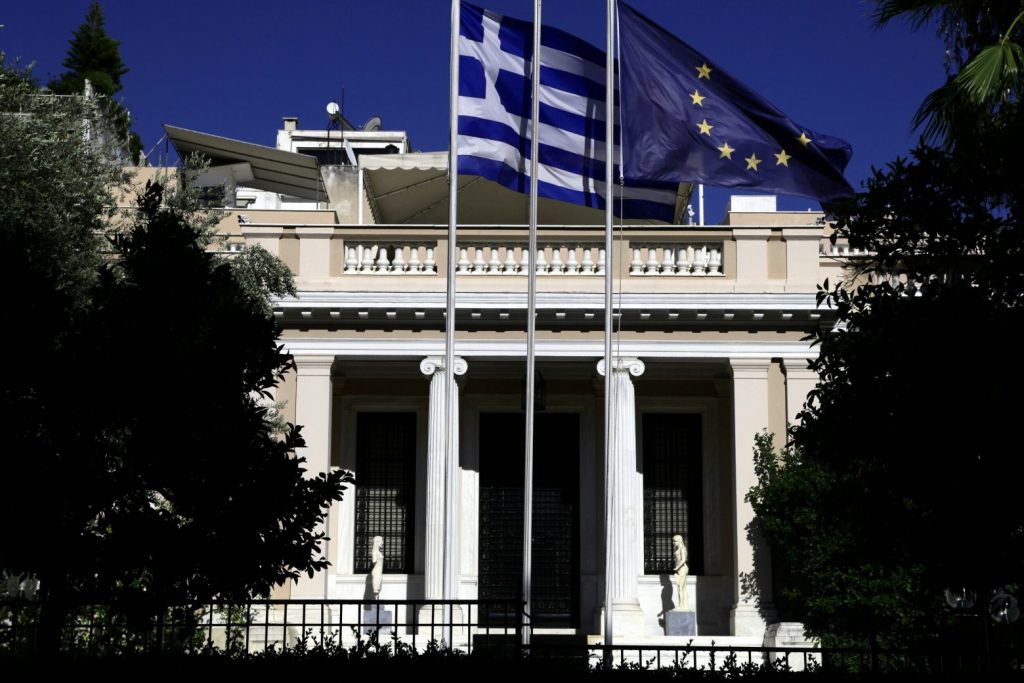
Earlier in the day, the executives are scheduled to meet with Prime Minister Kyriakos Mitsotakis at the Maximos Mansion.
Following the signing, the contracts must be ratified by Parliament. Regulatory approvals will then be required before Chevron can deploy a specialized seismic vessel, with surveys expected toward the end of 2026 and into early 2027.
Years in the Making
According to OT.gr sources, efforts to bring Chevron into Greece date back to 2022, when exploration activity was designated a project of strategic importance by the Greek prime minister. Stefatos held meetings in Washington with Chevron executives and members of Congress, as Athens sought to attract major U.S. players.
In spring 2025, Papastavrou, accompanied by Deputy Energy Minister Nikos Tsafos and Stefatos, visited Chevron’s headquarters in Texas. At the time, the Greek side reportedly pledged to expedite regulatory decisions and the tender process, seeking corresponding speed in the company’s exploration planning.
Energy, Geopolitics and U.S. Influence
Chevron’s entry comes amid intensifying energy coordination between Athens and Washington.
Over the past year, government officials have exchanged frequent visits between the two capitals. U.S. Interior Secretary Doug Burgum and Energy Secretary Chris Wright traveled to Greece, emphasizing strategic cooperation, particularly during the P-TEC conference in Athens last November. Papastavrou has also traveled to Washington as part of the same diplomatic push.
Analysts cited by OT.gr say Athens views the deepening energy alignment with the United States as carrying political weight beyond hydrocarbons and LNG. Greek officials are said to be quietly seeking a high-level symbolic gesture from the White House, potentially a visit to Athens by President Donald Trump, especially in light of the American president’s announced trip to Ankara in July. U.S. Ambassador to Greece Kimberly Guilfoyle has publicly hinted at such a possibility and is regarded as playing a central role in advancing bilateral energy agreements that align with the White House agenda.
Beyond upstream exploration, the White House has prioritized expanding U.S. liquefied natural gas exports to Europe. Greece is central to that effort through the so-called Vertical Corridor, a pipeline network linking Greece, Bulgaria, Romania, Moldova and Ukraine.
The route begins at Greece’s national gas transmission system, with entry points suitable for U.S. LNG at the DESFA terminal in Revithoussa and the floating storage and regasification unit in Alexandroupoli.
The European Union’s decision to ban Russian natural gas imports from 2027, combined with Ukraine’s significant fuel needs, has opened market space for U.S. LNG. Agreements signed in November by ATLANTIC (a joint venture of AKTOR and DEPA Commercial) aim to channel American LNG through Greece and northward via the Vertical Corridor, although regulatory and infrastructure hurdles remain.
On Feb. 24, U.S. Energy Secretary Chris Wright is set to host a meeting in Washington with energy ministers from the Vertical Corridor countries and companies involved in LNG transit. Papastavrou and ATLANTIC CEO Alexandros Exarchou are expected to attend. Exarchou has signaled that additional LNG import agreements could be announced in Washington.
A Broader Eastern Mediterranean Strategy
The Chevron signing also aligns with a broader U.S. legislative initiative. As previously reported by OT.gr, a bill titled the “Eastern Mediterranean Gateway Act” has advanced in the U.S. Congress, designating Greece, Cyprus, Israel and Egypt as strategic partners in the region’s emerging energy architecture.
The legislation would expand the authority of U.S. secretaries of state and energy to strengthen energy security and defense cooperation in the Eastern Mediterranean, a region seen as a potential future supply source for Europe once Russian gas flows cease.
For Athens, the objective is twofold: to secure investment and security assurances from the United States, and to anchor Greece more firmly in the West’s evolving energy map.
For Athens, the objective extends beyond hydrocarbons: to secure U.S. capital and reinforce security assurances while tying Greece more tightly to Washington’s energy agenda. In a region shaped by shifting U.S. calculations and by President Donald Trump’s transactional approach to alliances Greek officials appear to view energy cooperation as both investment policy and geopolitical insurance.