
All economic data and forecasts, ranging from international institutions to credit rating agencies, local authorities, and financial pundits, presented a sanguine narrative for the Greek economy in 2026. However, the protracted conflict in the Middle East has upended these optimistic projections, which anticipated economic growth to hover upward of 2% in 2026, with Greek authorities even placing GDP expansion at 2.4%.
Institutions were, by and large, in alignment regarding the performance of the Greek economy, drawing on pre-war data projections. The European Commission foresaw a 2.2% growth rate, the OECD predicted the Greek economy would grow by 2.1%, while the International Monetary Fund projected a more cautious 2% growth rate for 2026.
The Bank of Greece fired the first warning shot, trimming its 2026 forecast for the Greek economy to 1.9% from 2.1%. Piraeus Bank’s analysis maps out the risk range more explicitly: while its baseline scenario holds at 1.9%, a prolonged crisis with sustained high energy prices could drag growth down to 1.5%, with inflation potentially reaching 5%.
The IMF, already more cautious, has set its Greek growth estimate at 1.8%, citing three structural vulnerabilities: the economy’s heavy dependence on imported energy, which translates directly into higher costs for businesses and households; the outsized role of consumption in driving growth, which suffers when disposable income is squeezed; and the reliance on tourism and services exports, both highly sensitive to international uncertainty.
Energy is the Key Pressure Point
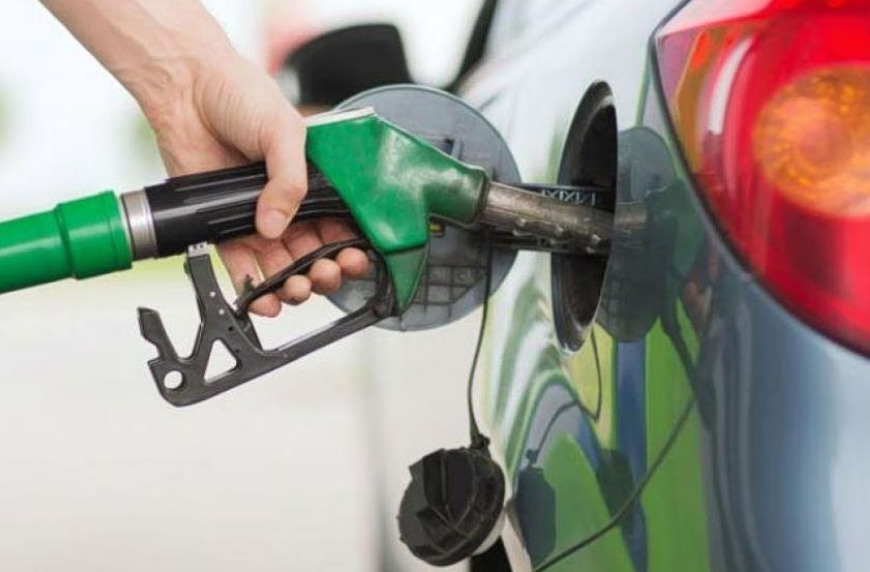
The primary transmission mechanism is energy. Greece’s budget was drawn up on the assumption of oil prices near $60–65 per barrel. With tensions in the Middle East and risks to the Strait of Hormuz — through which roughly 20% of global oil and LNG supply passes — prices have moved considerably higher, fueling inflation and constraining economic activity.
Even if the war ended tomorrow, the ESM chief said at the most recent Eurogroup meeting, the effects would linger for months.
Baseline Scenario Shifts
The IMF and OECD have both warned that further escalation would push energy and food prices higher and depress global growth, with major European economies already revising their own forecasts downward — a dynamic that feeds through to Greece via trade and tourism channels.
The result is a clear shift in the baseline. Growth near 2% remains achievable but is no longer taken for granted. The most likely range has narrowed to 1.8%–2%, with downside risks pointing toward 1.5% if the crisis proves protracted. Greece has not lost its growth momentum, but is being forced to navigate a considerably more challenging environment.
Source: tovima.com