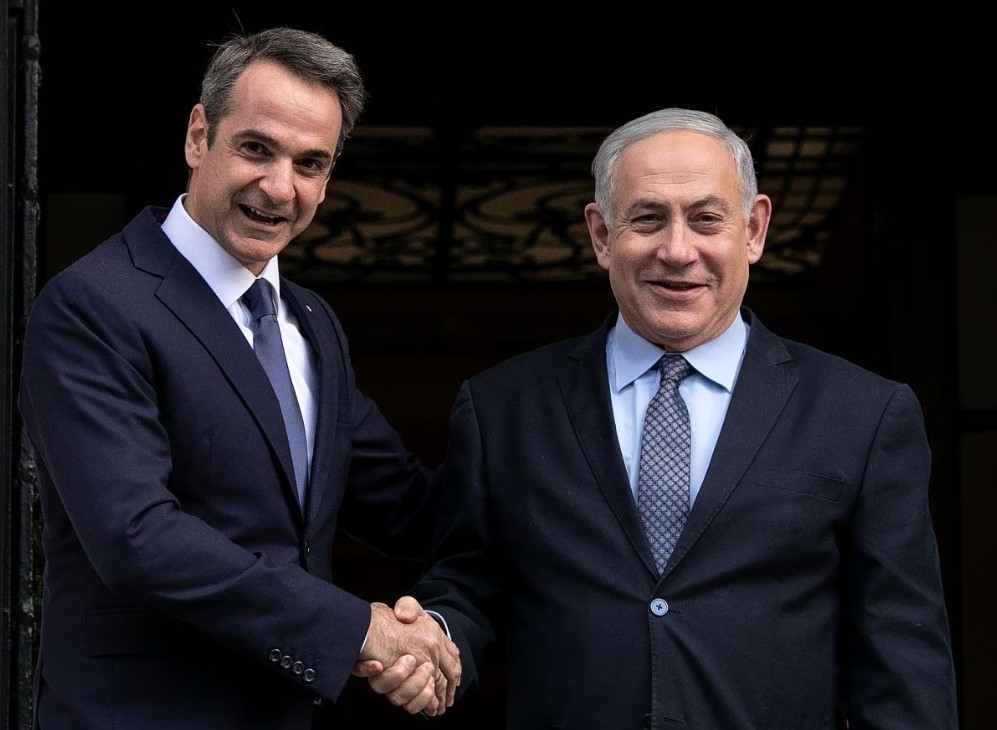


Amid growing international debate over externally driven initiatives aimed at easing the complex disputes of the Eastern Mediterranean—and against a regional tempo increasingly shaped by the United States—Greece, Cyprus and Israel today revive their trilateral cooperation in Jerusalem.
This marks the first joint meeting of Greek Prime Minister Kyriakos Mitsotakis, Cypriot President Nikos Christodoulides, and Israeli Prime Minister Benjamin Netanyahu since the outbreak of war between Israel and Hamas, the subsequent confrontation with Hezbollah in Lebanon, and, ultimately, escalating tensions with Iran. The core objective is unmistakable: to project this trilateral partnership as a long-term pillar of stability along the volatile fault line linking the Eastern Mediterranean to the Middle East.
The intended recipients of this message are twofold—and fundamentally different. On one hand stands Washington, where President Donald Trump has made clear his preference for efficient cooperation with structured alliances rather than isolated bilateral ties. On the other is Ankara, where both the trilateral framework and each of its members are viewed with deep suspicion.
Athens’ Strategic Balancing Act
In Athens, officials are keenly aware that strategic cooperation with Israel—particularly following the breakdown of Israeli-Turkish relations—has become a cornerstone of Greece’s growing geopolitical influence in the Eastern Mediterranean. This explains the delicate balancing act Greece maintained throughout Israel’s intense military campaign in Gaza: preserving close contact with Prime Minister Netanyahu while simultaneously reiterating Greece’s commitment to international law and openly describing Israel’s response to Hamas’ October 2023 terror attack as disproportionate.
The consistent refrain from the Prime Minister’s Office and the Foreign Ministry has been that Greece remains both a strategic partner of Israel and a traditional interlocutor of the Arab world. According to reliable sources, this stance caused some irritation in Tel Aviv. Athens, however, moved to reinforce bilateral ties in tangible ways—particularly in defense procurement—while adhering to this dual-track policy.
It is within this framework that Prime Minister Mitsotakis today visits Ramallah first, before traveling on to Jerusalem.
Turkey, Syria and the Question of Power
Senior diplomatic sources tell To Vima that by convening the trilateral once again, Greece is signaling its presence in a region marked by instability and multiple open fronts directly touching on national interests. Syria is cited as a key example: Israel is active there not only militarily but also as a deterrent against the expansion of Turkish influence.
The term repeatedly used by these sources is “counterweight.” In essence, the Greece–Cyprus–Israel axis is positioned as a counterbalance to Turkey’s increasingly revisionist ambitions, as Ankara seeks to emerge as a dominant power in the Middle East—and, by extension, the Eastern Mediterranean.
President Recep Tayyip Erdoğan’s diplomacy stands in stark contrast to Israel’s strategic doctrine. Turkey’s political leadership, supported by pro-government and nationalist media, has openly targeted Athens, Nicosia and Tel Aviv, accusing them of attempting to encircle Turkey. Particular emphasis is placed on Israel-Cyprus defense ties, with frequent claims—widely dismissed in diplomatic circles—of excessive armament aimed at Turkish Cypriots and, by implication, Turkey itself.
Beyond rhetoric and Turkey’s support for Hamas, Israel and Turkey now find their interests colliding directly on Syrian soil, with analysts increasingly warning of the potential for direct confrontation.
Washington, F-35s and the Erdoğan–Netanyahu Divide
Bridging the widening rift between Netanyahu and Erdoğan is reportedly a priority for President Trump, as confirmed publicly by Tom Barrack, the U.S. ambassador and special envoy for Syria. For now, however, such reconciliation appears distant.
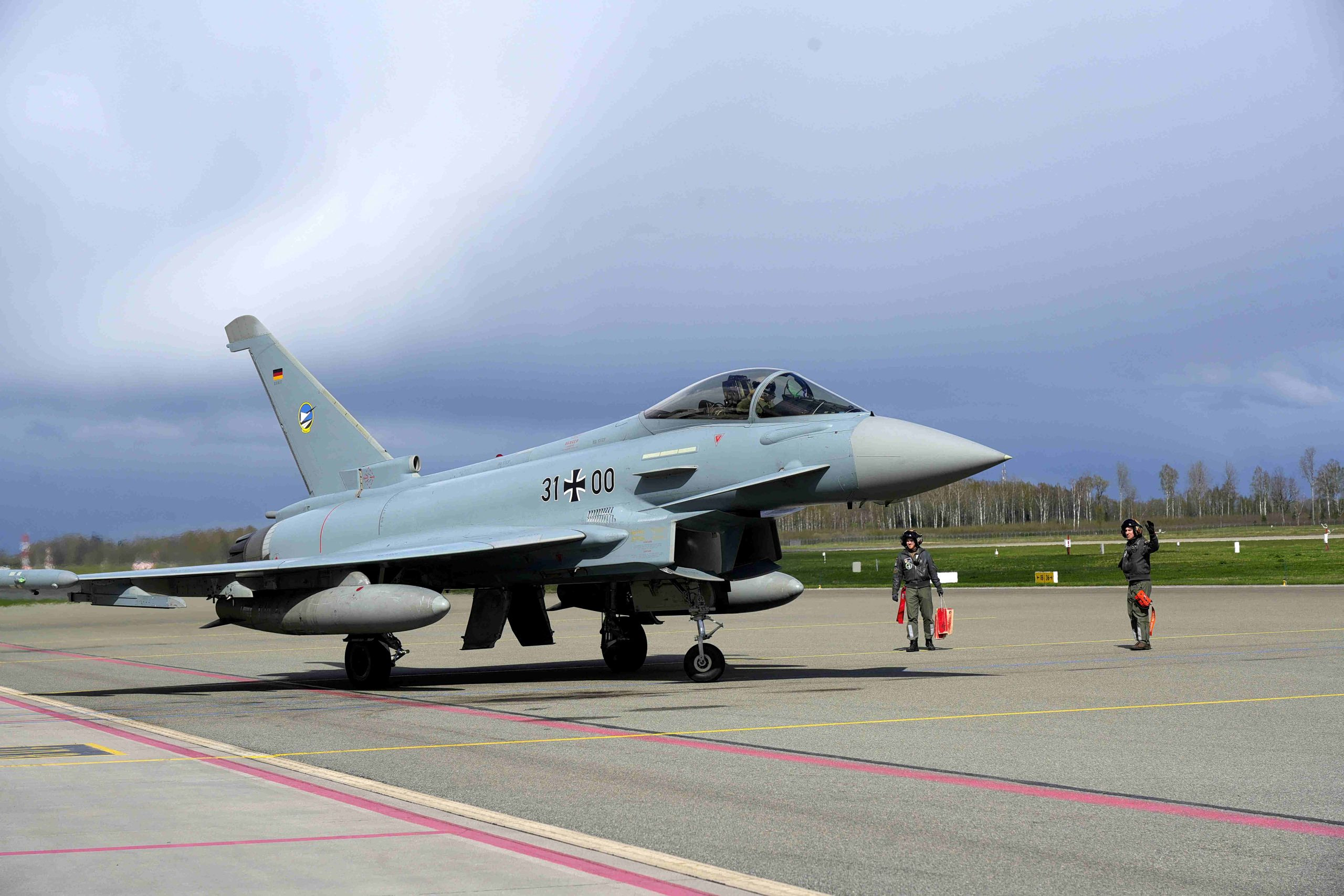
On one critical issue, Athens and Jerusalem are firmly aligned: Turkey’s possible return to the F-35 fighter jet program. Neither Greece nor Israel wishes to see Ankara regain access to fifth-generation combat aircraft. Greece’s reasons are self-evident; Israel’s stem from its determination to maintain absolute air superiority across the region—a decisive factor, analysts note, in Israel’s recent dominance over Iran, achieved largely through its fleet of F-35s.
In Athens, officials believe Netanyahu can act as a counterweight to Turkey’s rearmament ambitions—not only through his direct channel to Trump, but also via the influential Jewish lobby in the United States. Prime Minister Mitsotakis is expected to raise the issue during his bilateral meeting with the Israeli leader. The Greek government also assesses that Netanyahu’s strong rapport with the White House could indirectly benefit Athens.
Energy, Trade and the Emerging Corridor
Geographically, Greece, Cyprus and Israel form a stable bridge between the Middle East and Europe—one that could soon play a pivotal role in sectors central to U.S. strategic interests: energy and trade. This axis is positioned to function either as a unified export hub for natural gas and alternative energy, or later as a segment of the planned IMEC corridor (India–Middle East–Europe), designed in part to counter expanding Chinese influence.
The Open Question of the Power Cable
The revival of the trilateral talks comes just days after a major Israel–Egypt energy agreement, and weeks after the ratification of an Exclusive Economic Zone (EEZ) deal between Cyprus and Lebanon. Israel, Cyprus and Egypt are already linked through EEZ agreements, collectively establishing a framework for exercising sovereign rights in the Eastern Mediterranean based on international law and good-neighborly relations—explicitly at odds with Ankara’s more assertive, power-centric approach.
What remains uncertain is whether today’s talks will yield progress on the long-troubled electricity interconnection project, which includes the Israel–Cyprus segment. After a previous meeting between Christodoulides and Netanyahu, the Israeli prime minister placed the project under the IMEC umbrella, effectively decoupling the Greece–Cyprus section—a move that irritated Athens, particularly as Greece and Cyprus were already locked in disagreements over costs, technical parameters and execution terms.
With Mitsotakis and Christodoulides having effectively frozen the project pending new investors and a revised viability study—and amid internal political disputes in Cyprus—expectations in Tel Aviv today remain restrained.
Still, the symbolism of the meeting itself speaks volumes: in a region defined by shifting alliances and unresolved conflicts, the Greece–Cyprus–Israel triangle is once again asserting its place on the geopolitical map.
Source: tovima.com