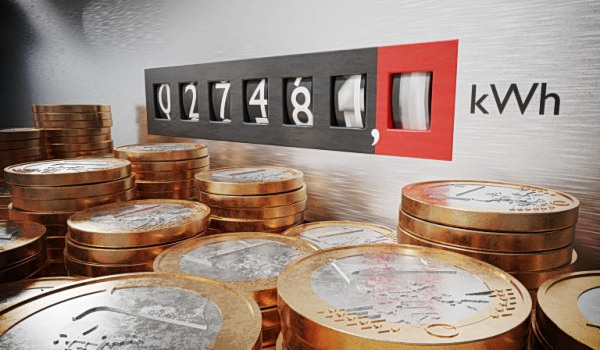




At a time of persistently high energy costs—when electricity bills have become a constant stress test for households and businesses alike—a new initiative is emerging as a potential counterweight. The Technical Chamber of Greece (TEE), the country’s official technical adviser to the state, is stepping into the energy sector, aiming to turn collective strength into a form of energy resilience.
TEE, which represents more than 100,000 professionals including engineers, architects, surveyors, and urban planners, plans to establish a Citizens’ Energy Community—essentially a cooperative structure. By pooling its large and highly specialized membership, the Chamber hopes to achieve economies of scale that would otherwise be unattainable for individual consumers. The stated goal is ambitious: to reduce members’ electricity bills by as much as 50%.
This initiative carries particular weight given the broader context in Greece. While energy self-production has shown signs of stagnation, the rapid expansion of energy communities seen over the past seven years has slowed sharply. Grid capacity constraints and frequent changes to the regulatory framework have increasingly acted as roadblocks. Against this backdrop, TEE is betting on a new model that combines scale with technical expertise.
Symbolic Entry Cost, Large-Scale Ambitions
Under the current plan, each member will be able to participate with up to two electricity connections—one for their home and one for their workplace—with a maximum annual consumption of 6,000 kilowatt-hours. Financial participation is deliberately kept low: a symbolic cooperative share of €10 grants voting rights in the community. The actual investment costs are expected to be covered through a mix of equity and borrowing.
All electricity consumed will come exclusively from renewable sources, primarily solar photovoltaic and wind power projects. If implemented as designed, TEE’s energy community would become the largest in Greece and one of the largest in Europe, leveraging not only the sheer number of its members but also their technical know-how to ensure long-term economic and technological viability.
Preparatory work is already underway. The legal advisor’s study for establishing the community is expected to be submitted by January 23. The governing committee of TEE has decided that once applications from the first 300 members are submitted, the formal process will begin immediately. Participation will remain open to additional members, with the aim of reaching a critical mass.
That threshold is defined as annual electricity consumption of at least 30 gigawatt-hours (GWh), considered necessary for the community’s financial sustainability. New members joining at a later stage will do so through the issuance of additional cooperative shares. At the same time, organizational preparations are progressing, including groundwork for bilateral power purchase agreements (PPAs). Through these contracts, the energy community will secure long-term agreements with solar and wind parks on behalf of its members, locking in lower electricity costs over time.
A Stalled Market
TEE’s initiative cannot be viewed in isolation from the broader state of energy communities in Greece. The latest available data (October 2025) reveal a sector marked by contradictions—precisely the environment in which TEE’s plan will be tested.
According to analysis by The Green Tank, a Greek think tank focused on energy and environmental policy, the market is still moving, but at a pace far below what would be expected in a country facing chronically high energy costs.
Currently, Greece has 1,747 active energy communities, including those formed by citizens, farmers, municipalities, organizations, and businesses. This figure has barely changed since last spring. From March 2025 until now, only 18 new project applications were submitted, while just 76 have been filed since the beginning of 2024. By comparison, between the launch of the institution in 2018 and September 2025, a total of 6,391 applications were submitted—an illustration of how sharply momentum has slowed.
The “Apollo” Program and Municipalities
Still, some movement is underway. On Tuesday, December 30, the long-awaited ministerial decision was signed to relaunch the “Apollo” program. Through this initiative, municipalities aim to reduce energy costs for vulnerable households eligible for Greece’s Social Residential Electricity Tariff A.
This will be achieved through municipal participation in energy communities established by Greece’s regions—12 of the 14 provided for by law—or through communities created directly by the municipalities themselves. Dozens of local authorities have already formed collective self-production schemes, either independently or in cooperation with others.
The solar and wind projects needed to support the Apollo program are scheduled for completion by the end of 2027 and 2028 respectively. Relevant tenders are expected to be launched in the coming period by the Regulatory Authority for Energy.
Project Cancellations Mount
At the same time, the number of planned energy community projects that never reach operation continues to grow. Since 2018, 3,208 projects—more than half of those initially planned—have been cancelled.
The primary reason remains the lack of available grid capacity, compounded by bureaucracy and repeated regulatory changes. A notable example involves reforms introduced about a year ago by the Ministry of Environment and Energy concerning energy self-production. The current compensation mechanism for community members offers fewer financial benefits than the previous framework, while a supplementary ministerial decision needed to resolve existing bottlenecks is still pending.
Regional Contrasts
Regional data highlight stark disparities. Central Macedonia emerges as the clear “champion” across nearly all indicators: it hosts the largest number of energy communities (297), the highest connected capacity (354.5 megawatts), but also the greatest amount of cancelled capacity (682.6 MW).
At the other end of the spectrum, Western Macedonia records two troubling distinctions. For every 1 MW connected to the grid, approximately 3.6 MW are cancelled. Moreover, 88.7% of the cancelled capacity αφορά projects that had already received notification that grid connection was not possible.