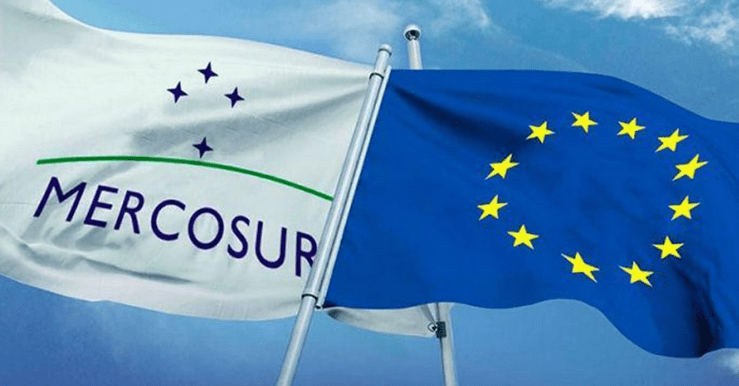

fter 25 years of negotiations, the European Union has reached a far-reaching partnership agreement with Mercosur, the South American trade bloc made up of Argentina, Brazil, Paraguay and Uruguay. Together, the EU and Mercosur form a market of about 780 million consumers, and for Greece the deal could reshape how its products and services reach the world.
The European Commission has briefed each EU member state individually on what the agreement means for its economy. For Greece, the message is: more exports, lower costs and stronger protection for some of the country’s most famous products. At the same time, the agreement appears to offer protection for flagship products such as feta from imitation in local markets. However the seven-year transition period built into the deal raises concerns about how effective that protection will be in practice.
A big market for a small-business economy
Greece’s export sector is dominated by small and medium-sized companies. Ninety-seven percent of Greek exporters are small firms, many of which struggle to sell beyond the EU because of high tariffs and complex bureaucracy.
The EU-Mercosur agreement aims to change that by:
- Eliminating tariffs on 91% of all products, making Greek goods cheaper and more competitive in South America
- Simplifying customs and certification procedures, cutting red tape for small exporters
- Improving access to public contracts in Mercosur countries through better information and transparency
- Providing dedicated small-business coordinators and online tools to help Greek companies operate abroad
Trade already plays a central role in Greece’s economy. About 631,000 jobs, roughly one in eight, are supported by Greek and EU exports to the rest of the world. Total trade between Greece and Mercosur countries stands at €2.6 billion, showing there is already a solid base to build on.
New export lifeline for Greek farmers
One of the biggest opportunities lies in agriculture and food. Today, agri-food products account for only 5% of EU exports to Mercosur, largely because of tariffs that can reach 55% on European food products.
Under the agreement, these tariffs will be scrapped or sharply reduced, opening the door for Greek farmers and producers to expand sales. In 2024 alone, Greek agri-food exports to Mercosur were worth €34.3 million, even under the current high-tariff regime.
Products such as olive oil, table olives, cheese and wine -staples of Greece’s food identity- are expected to benefit most from the new access.
Protecting feta, Kalamata olives and other PDO products
A key pillar of the deal is the protection of Geographical Indications (GIs) legally protected names that link a product to its place of origin. The agreement will protect 344 EU food and drink products from imitation in Mercosur markets, including 21 from Greece.
Among the Greek names covered are:
- Feta cheese
- Kefalograviera Cheese
- Kalamata Olives
- Olive Oil from Kalamata, Sitia Lasithiou, Kolymvari Chanion Crete, Lygourio Asklipiou
- Mastic from Chios
- Wines from Santorini, Nemea, Naousa, Samos, Amyntaio and Mantineia
- Retsina of Attiki
- Tsipouro (spirit drink)
- Saffron from Kozani
- Manouri cheese
This matters because products with a protected geographical indication typically sell for two to three times more than similar, non-protected goods. For Greek exporters, that translates into higher revenues and stronger brand recognition.
There is, however, a seven-year transition period for feta in Argentina, Brazil and Uruguay. Producers who were already using the term “feta” there will be allowed to continue doing so during that time, as long as they clearly label the product’s true geographic origin. After that, the name will be reserved for Greek feta.
Safeguards for Greek and EU farmers
To prevent sudden import surges from undercutting European producers, the agreement includes strict quotas on sensitive agricultural imports from Mercosur:
- 99,000 tons of beef (1.5% of total EU production)
- 25,000 tons of pork (0.1%)
- 180,000 tons of poultry (1.3%)
A safeguard clause allows the EU to step in if imports spike unexpectedly, and the European Commission has pledged to support farmers if market disruptions occur. All imported products must also comply with the EU’s strict food safety and sustainability standards.
A boost for Greek services, too
Goods are only part of the story. Greece is also an exporter of services to Mercosur, worth €1.6 billion a year. In 2023, that included:
- €1.5 billion in transport services
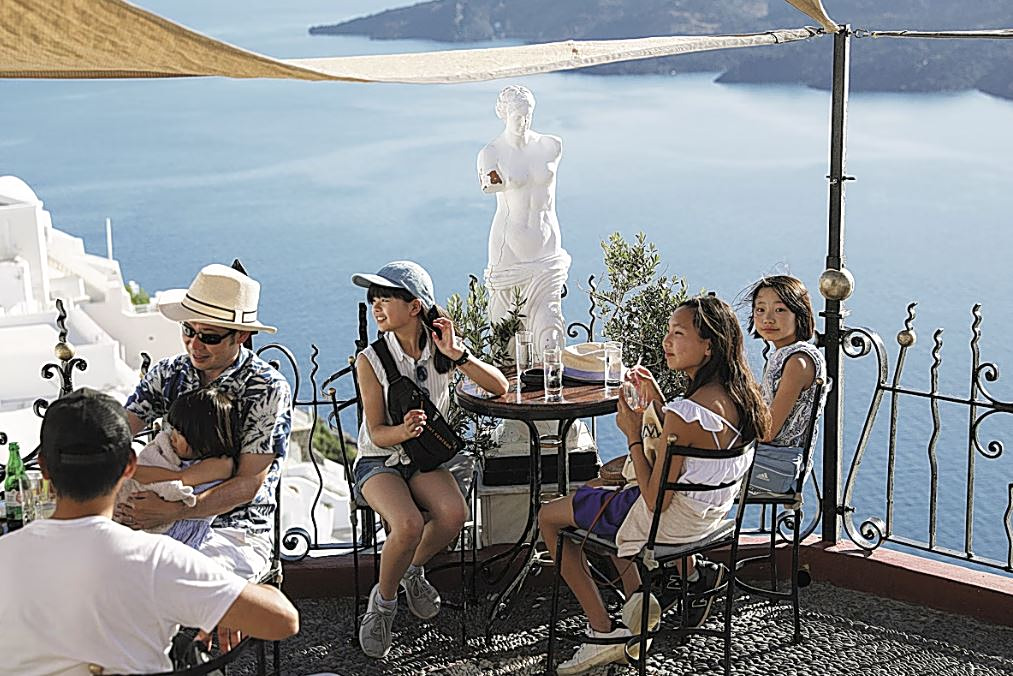
- €67 million in tourism
- €2 million in cultural services
The deal will further open Mercosur markets in sectors such as finance, telecommunications, transport, digital trade, postal and courier services, and environmental services, giving Greek companies more room to grow in Latin America.
Why Greek farmers are pushing back
Even as Brussels highlights the export and trade gains of the EU-Mercosur agreement, many Greek and European farmers are voicing deep opposition, warning that their own products risk being pushed aside in favor of cheaper imports.
“We believe our products will come second,” growers told To Vima, with some using even starker language. Some even called the deal “a tombstone on the country’s primary production sector.”
Lilian Niaka, a farmer and tree grower from Tyrnavos, in central Greece, said producers are demanding safeguards. “With the Mercosur vote, we want real safety nets for our products. We also want concrete respect for primary production, not just words,” she said.
From Thessaly, one of Greece’s main livestock-producing regions, Vasso Fasoula, a member of the Coordinating Committee of Livestock Breeders, expressed even deeper skepticism. “From the moment the agreement with Mercosur was signed, we are convinced that no support for our survival is foreseen,” she said.
Others describe their reaction in more emotional terms. Thanasis Goumas, a farmer from the Larissa area, said producers are “outraged” by the approval of the agreement.
The vote came at a politically sensitive moment. It was approved just days before a scheduled meeting on Tuesday, Jan. 13, between the prime minister and representatives of farmers, livestock breeders, beekeepers and fishermen, all groups that have been protesting for weeks, blocking roads across the country in a wave of nationwide demonstrations.
Source: tovima.com