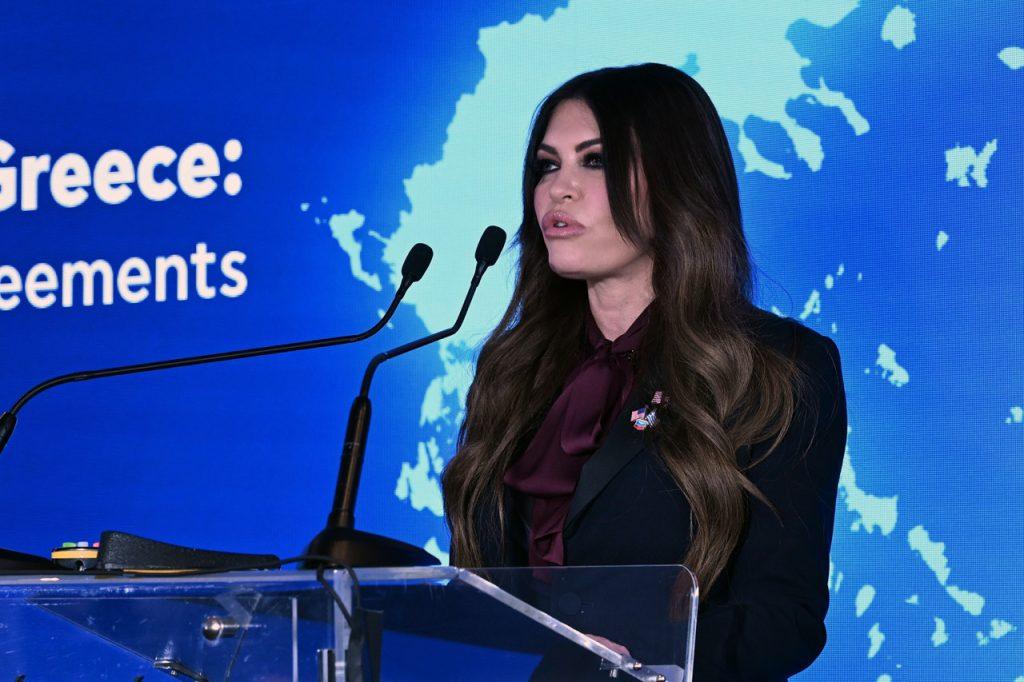


U.S. ambassador Kimberly Guilfoyle sent a strong message of geopolitical and energy support to Greece during an event showcasing new energy lease agreements between the Greek government and the Chevron-HELLENiQ ENERGY consortium.
The ambassador emphasized Greece’s pivotal role in the energy sector, particularly in the transportation of liquefied natural gas (LNG). “It is an honor to present this important achievement for the energy future of both our nations,” she stated. She highlighted how these agreements contribute to Greece’s transformation into an energy hub and directly strengthen the growing strategic partnership between Athens and Washington.
The U.S. official also praised the broader context of U.S.-Greek cooperation, noting, “The United States aims high and delivers on its commitments,” referring to the energy agreements as part of a larger strategic collaboration. She further reinforced the significance of Greece’s position in the new European energy architecture.
Greece’s role as energy leader
Guilfoyle outlined Greece’s critical role in the regional energy landscape, calling the country a key player in energy transit. She highlighted the potential of four newly granted hydrocarbon exploration leases, describing them as “promising” and capable of reshaping Greece’s energy future. These leases are expected to create income for Greeks, enhance regional energy security, and contribute to Europe’s ongoing efforts to diversify its energy sources.
She also praised Greece for its transparent institutional framework, which she believes has attracted global investors. “When there is stability and clear rules, global players invest, and contracts are honored,” Guilfoyle said, underscoring how Greece’s commitment to energy reforms has solidified its role as an emerging energy powerhouse in the region.
The vertical energy corridor and LNG
A key focus of the event was the development of the so-called “vertical energy corridor,” a project designed to enhance the transport of American LNG to Ukraine and Eastern Europe. Guilfoyle emphasized that this infrastructure development benefits both Greece and the United States, stating, “This is reshaping Europe’s energy map and creating an alternative to Russian gas—not just for today, but for future generations.” This growing energy partnership is seen as a vital step in Europe’s energy diversification, with Greece positioned at the center of this new energy flow.
Concluding her remarks, Guilfoyle reflected on the geopolitical dimensions of the agreement, stressing that such collaborations require patience and commitment. She expressed gratitude to the Greek government for its leadership and vision, adding that the U.S. Embassy in Athens is ready to support this long-term partnership.
“This is more than a business agreement; it is the building of bridges between two nations,” she concluded, reaffirming the strategic importance of the U.S.-Greek energy collaboration for the future of both countries.