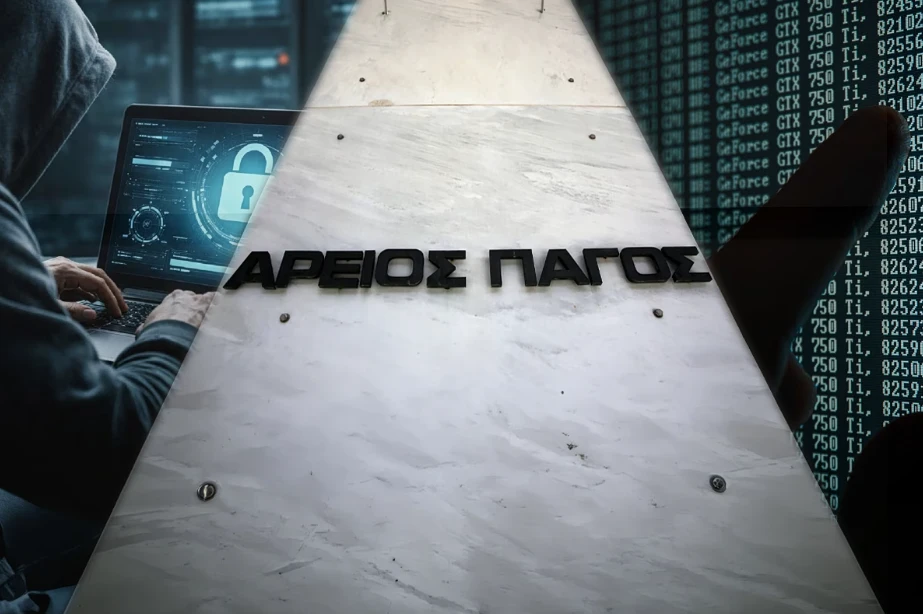


“The wiretapping case will remain an open wound for the rule of law and democracy itself in Greece, as long as the case file stays shelved and multiple questions remain unanswered.” Such was the response of legal sources yesterday to news that, for the third time, with the rubber stamp of the Judiciary, the case file relating to the wiretapping scandal is to remain in the archives, with no new substantive investigation.
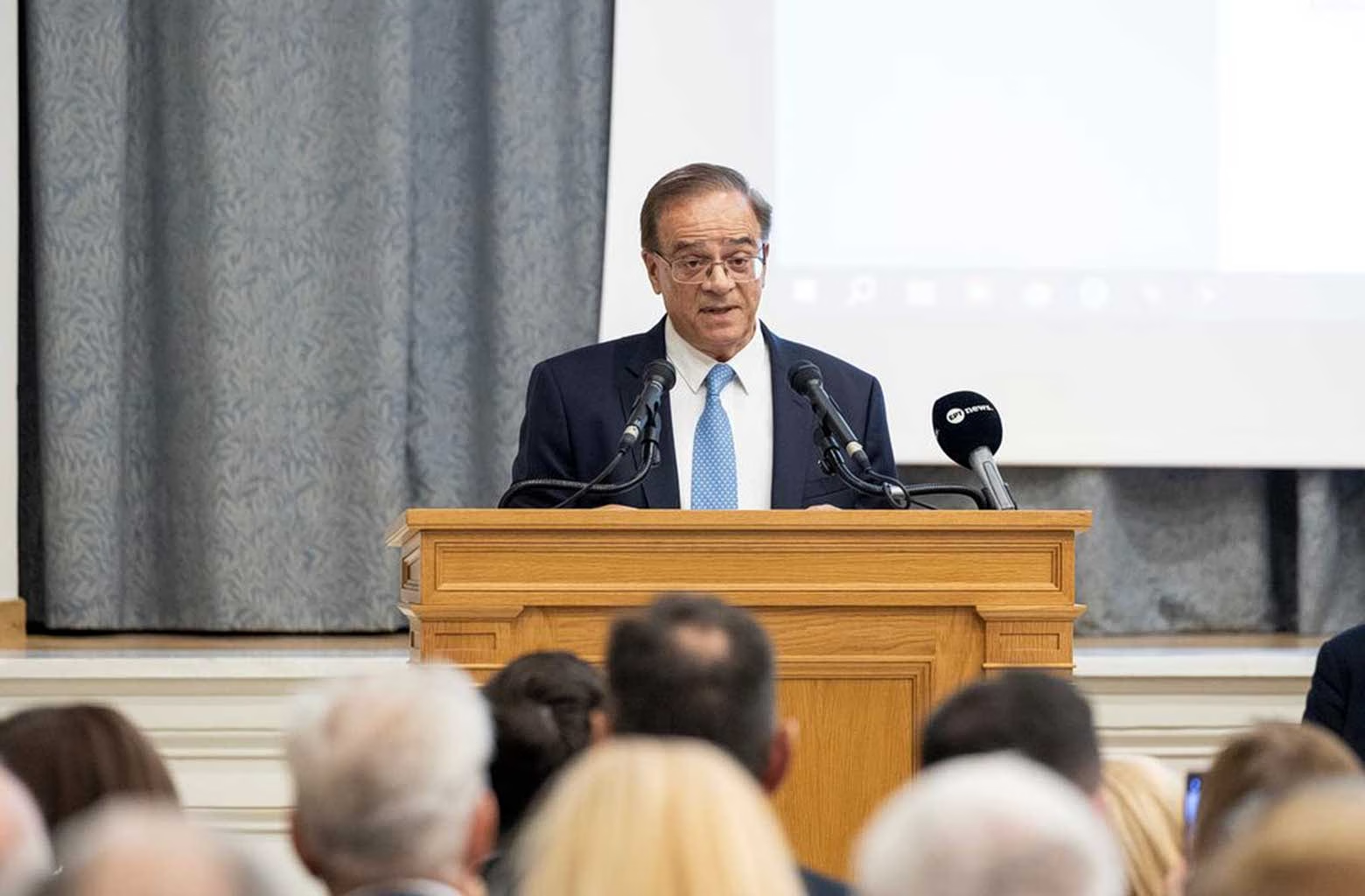
As the nation learned yesterday, Supreme Court Prosecutor Evangelos Bakelas, through relevant rulings, had determined for technical legal reasons that there are no grounds at present to retrieve the wiretapping case file from the archives.
However, sources within the Judiciary noted in the wake of the latest development that the decision not to retrieve the file from the archives does not mean the case will remain shelved forever. On the contrary, as they explained, should new facts emerge which are then brought to the attention of the Supreme Court Prosecutor’s Office, the case can be retrieved and a new round of investigations begun. Until that happens, as political figures were quick to point out, this new decision to keep the case file in the archives without any preliminary investigative action being taken, does nothing to dispel the shadow of a cover-up. In fact, the same sources go on to argue that a substantive investigation would likely bring back to the forefront of judicial scrutiny the role of individuals who were politically responsible for the running of the National Intelligence Service (EYP) at the time, including the Secretary General of the Prime Minister’s Office, Grigoris Dimitriadis.
How the prosecutor justifies his ruling:
■ With regard to Antonis Samaras’s request.
Addressing the request made by Antonis Samaras in which the former Prime Minister asked for “full transparency regarding the illegal wiretapping of his telephone,” the Supreme Court Prosecutor ruled that no new evidence had been submitted beyond what had already been investigated, both by Deputy Supreme Court Prosecutor A. Zisis (now retired) and former Supreme Court Prosecutor Konstantinos Tzavellas.
■ Regarding former Minister Christos Spirtzis’s request.
An assessment of the content of the request alone makes it clear that it does not invoke new facts or evidence, and that no facts or evidence are submitted or apparent that would justify the re-examination of the case. Rather, the request under review submits just three emails as new evidence with the claim that they existed “at the time of the attack and to this day” on the applicant’s mobile phone. These messages, which relate to: a) negotiations on the change of the legal status of the Civil Aviation Authority (CAA), b) an evaluation of Greece’s third support program under the European Stability Mechanism (ESM), and c) a telegram from the Greek embassy in Abu Dhabi regarding the establishing of a new Dubai–New York service via Athens, have already been investigated and do not constitute new evidence.
■ Regarding the requests made by Thanasis Koukakis and the attorney-at-law Zacharias Kesses.
The prosecutor ruled that, even if one were to conclude that espionage had been committed—a scenario determined not to apply in this instance—the individuals proposed as witnesses (Tal Dilian and other businessmen convicted at first instance) are, according to the applicant himself, the actual perpetrators. Consequently, any witness testimony obtained from them at this stage would subsequently be struck from the case file and disregarded at any later procedural stage.
Neither the statement of Tal Dilian, who was declared guilty by the first-instance decision of the Single-Member Misdemeanor Court of Athens, that “we sell to state agencies in accordance with all required regulations, but we never operate the systems on their behalf. We never operated any system in Greece,” nor the statement in the lawsuit Tal Dilian filed before the competent judicial authorities of Israel against Thanasis Koukakis, constitute new material facts or evidence, within the meaning of the law, that would justify the re-examination of the case. And this is because it is not mentioned in either the statement or the lawsuit that the software in question was sold by him (Tal Dilian) or a company of his interests to any Greek state agency, as the applicant baselessly claims, but rather that such a sale, which the applicant claims took place, would be lawful. Moreover, he (Tal Dilian) himself claimed, among other things, before the Single-Member Misdemeanor Court of Athens that “this software has never entered the country. And it did not do so, because it was never sold by Intellexa or by companies controlled by Dilian.”
For his part, the attorney-at-law Zacharias Kesses, who represents many of the wiretapping victims, stated: “Supreme Court Prosecutor Bakelas invokes legal claims that do not constitute a convincing application of the law, but are instead constructs inadequately underpinned by the current legal framework. The decision does not address the substance of the critical issues the requests brought to light. Instead, it employs an artificial legal construct to transform the process into a mechanism for evading investigation, rather than a means of seeing that justice is done.”
Irrespective of this decision, however, the wiretapping case remains very much “alive,” as much will be decided both by the appellate criminal trial this December, and by the tidal wave of lawsuits filed by victims which are scheduled for hearings in April 2027.
Political figures noted that this new decision to keep the case file in the archives without any preliminary investigative action being taken, does nothing to dispel the shadow of a cover-up.
Source: tovima.com