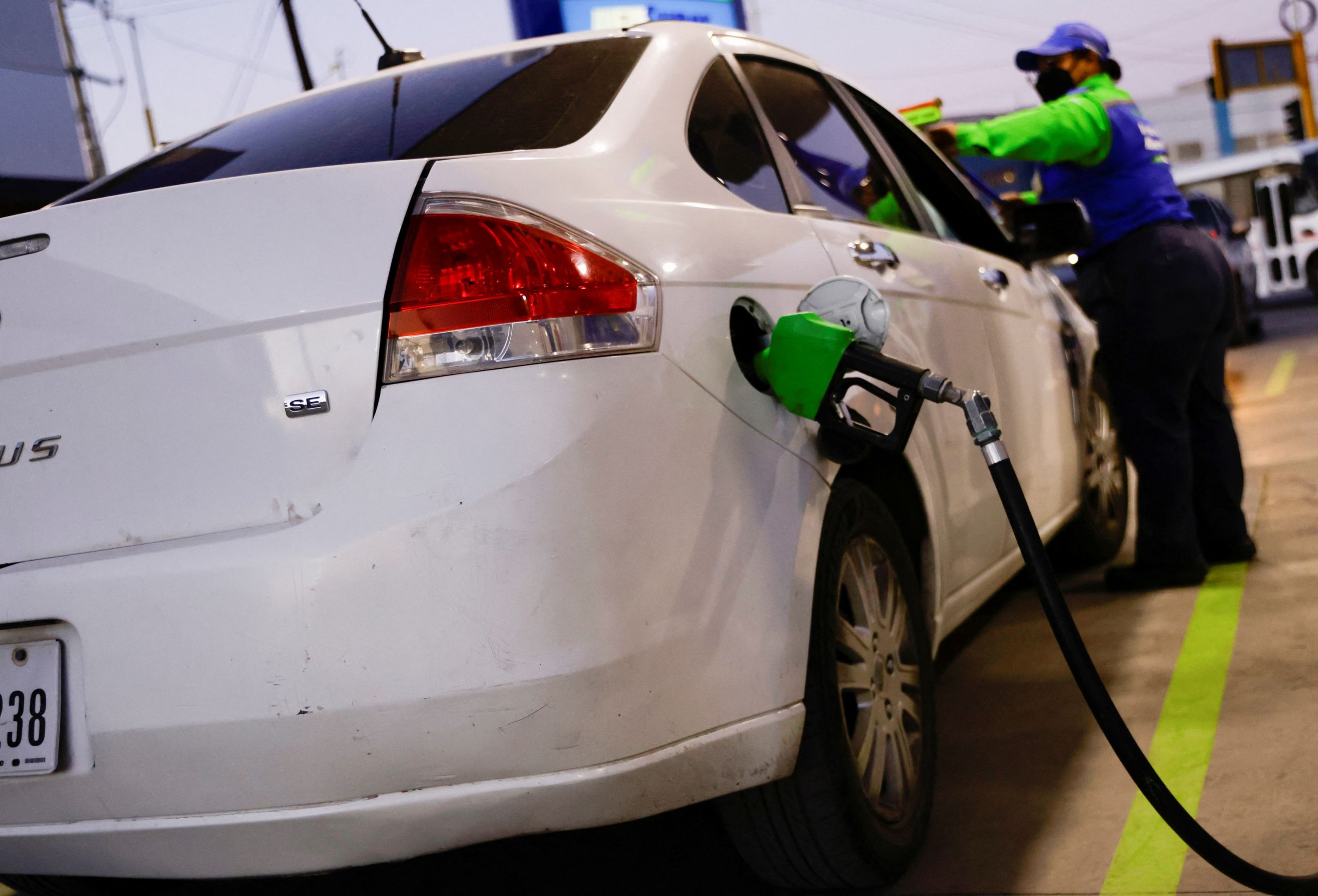



The government’s economic team is weighing whether to extend the 10-cent-per-liter diesel subsidy at the pump beyond August 31, when the current ministerial decision expires, as international oil prices climb again.
A final decision is expected next week, with continuation of the measure considered essentially a done deal, according to ERTnews, aimed at easing consumer frustration starting September 1, when most people will be back from summer vacation and returning to their daily routines.
The national average price of diesel has surpassed €2 a liter, with no sign of relief given the current state of the wars affecting global oil markets.
According to the latest bulletin from the Fuel Price Observatory, the average diesel price stood at €2.012 per liter on Thursday. It rose by 1.6 cents in a single day, and compared to August 17, the increase already totals 2.3 cents per liter. At the same time, Brent crude has topped $94 a barrel, a three-week high, with the effects clearly showing up in fuel prices at the pump in Greece.
Refinery Discounts Set to Expire
The government’s agreement with refiners Helleniq Energy and Motor Oil, which provides discounts of 5 cents on diesel and 10 cents on unleaded, also expires at the end of August.
Combined, the two subsidies currently give drivers a break of just over 15 cents per liter.
It remains unclear whether the refiners will continue their portion of the discount, a question the two sides will presumably discuss before the deadline.
The Funding
The diesel subsidy, along with other measures aimed at keeping fuel prices in check, is financed through a roughly €200-230 million pool earmarked for energy interventions.
Within that funding framework, part of a broader package of measures against high prices, officials are weighing a combination of pump subsidies and targeted support for vulnerable households and professionals, such as transporters and farmers.
Diesel: Prices on the Rise
The economic team is more concerned about diesel, since it acts as the main driver of inflation. Because diesel is the primary fuel for transporting goods, running industry, and agricultural production, any price increase ripples through the entire supply chain, with transport costs passed almost immediately onto the final price of products, fueling a fresh wave of price hikes.
If diesel prices spike, the cost of transporting all goods to supermarket shelves rises automatically, triggering another round of broad-based inflation.
This adds further pressure on both households and businesses, which are left absorbing part of the higher operating costs.
Notably, the economic team has set an informal threshold at international Brent crude prices near or above $100 a barrel, a level that factors directly into decisions on intervention.
The Outlook Isn’t Promising
The wholesale market gives no indication of an imminent drop in oil prices, as refiners expect further increases in the coming days. The refinery price for both unleaded and diesel currently stands at €1.47 before VAT and €1.81 with VAT included.
Since the start of July, the price of Brent crude has risen more than 5%, or about 10 cents per liter, while unleaded has seen an increase of roughly 6 cents.
Forecasts for the coming period suggest prices will likely stabilize near current levels, around €2 per liter in major urban areas. Prices remain higher on the islands and in more remote parts of the country.
Also of interest is how heating oil prices will move heading into autumn and winter. Starting in September, increased demand from Central and Northern European countries is expected to add further pressure to the market.
Fuel market sources estimate that if heating oil sales began immediately, prices could exceed €1.60 per liter, a level nearly unaffordable for Greek households.
Source: tovima.com








![Τακτοποίησης Φορολογικών Υποχρεώσεων που προκύπτουν από την απώλεια ζωής [Μέρος Ε]](https://www.ot.gr/wp-content/uploads/2026/06/akin.jpg)