

Greece’s tourism industry, long accustomed to strong summer demand, is beginning to register the first signs of strain as global uncertainty reshapes travel behavior.
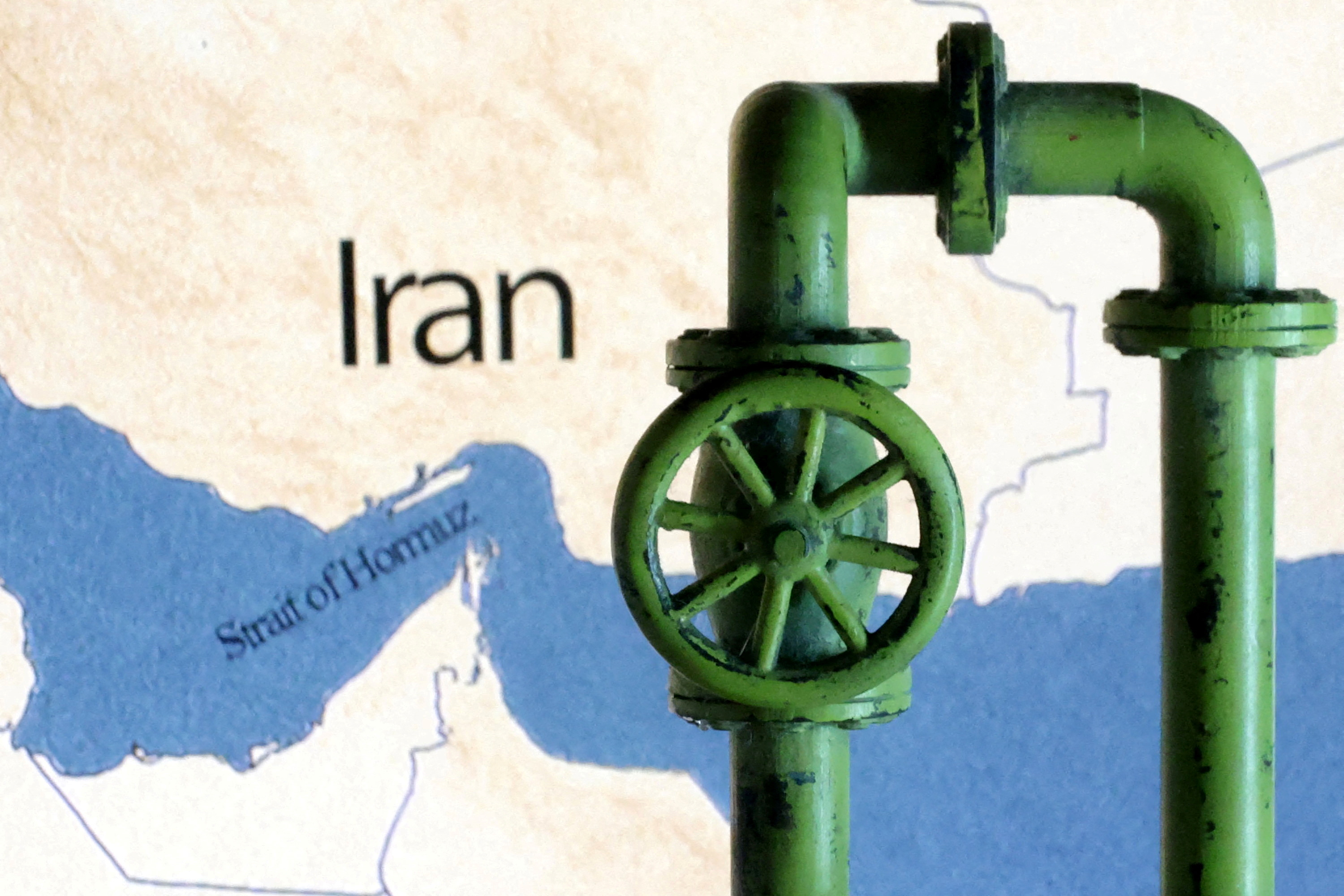
The ongoing geopolitical tensions in the Middle East are already influencing how—and whether—travelers commit to trips. Across the market, bookings are slowing or, in some cases, pausing altogether. The response from the industry has been swift: adjust prices, ease cancellation terms and try to secure reservations early.
What is emerging is not a collapse in demand, but a more cautious traveler—one less willing to commit without reassurance.
Discounts in High-End Destinations
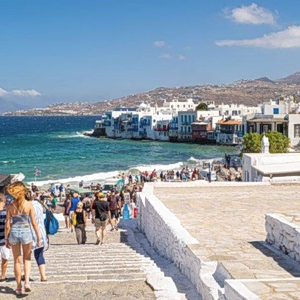
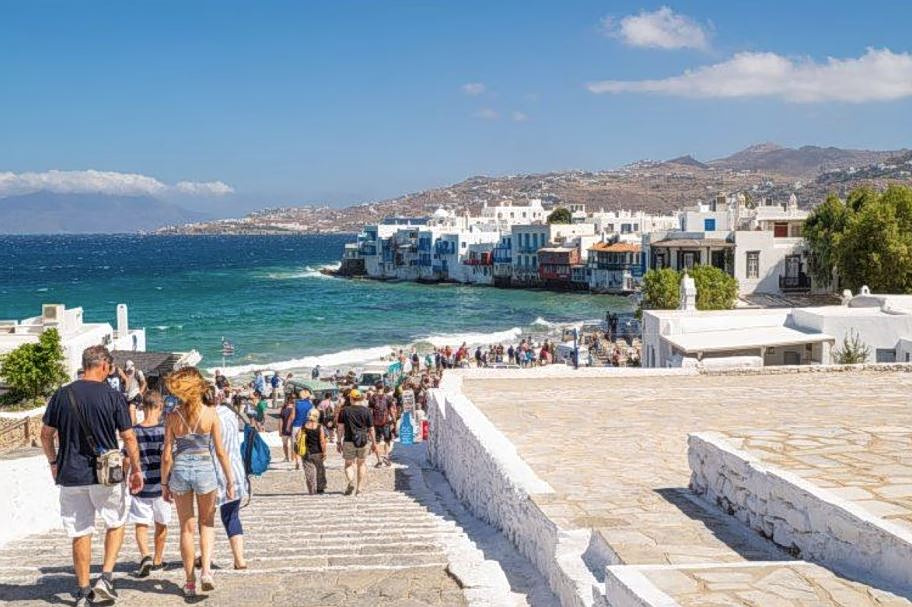
Nowhere is this shift more visible than in Greece’s luxury segment.
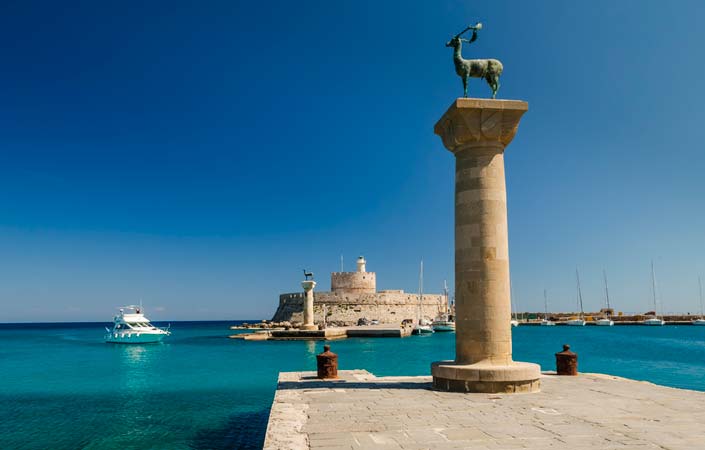
In Rhodes, a snapshot of five-star hotels for mid-June shows that 34 out of 45 available properties—about 76%—are offering discounted rates. Only a small minority have held their prices steady.
Santorini presents a similar picture. For early July stays, roughly 73% of available five-star hotels—61 out of 84—are listing rooms at reduced prices.
Yet these discounts do not tell the whole story. Availability remains scarce. Nearly 95% of properties in both destinations are already fully booked for the dates examined, suggesting that demand, while under pressure, has not disappeared.
Instead, hoteliers appear to be acting preemptively, using price incentives to “lock in” bookings before the uncertainty deepens.
Flexibility Over Price Cuts
Tour operators, particularly in Germany, are taking a slightly different approach. Rather than broad price reductions, companies are leaning into flexibility, offering travelers the ability to change or cancel plans with minimal risk.
Alltours, for example, is waiving fees for its Flex-Tarif option on bookings made through mid-April, covering trips scheduled through October 2026. The policy allows cancellations or changes up to 15 days before departure without explanation.
TUI, the largest tourism group in Europe, has introduced a similar incentive. Through its “My TUI Coupon,” it is offering a 50% discount on flexible booking add-ons, paired with free changes or cancellations up to 15 or 29 days before travel.
The First Cracks in Air Travel
So far, Greece has avoided a wave of cancellations. But early signs of impact are appearing in air travel, the backbone of the country’s tourism industry.
About three-quarters of international visitors arrive by plane, making flight data an early indicator of broader trends. Eftichiοs Vassilakis, chairman of Aegean Airlines, recently noted a drop in passenger flow of roughly 8% to 10% compared with previous weeks. While modest, the decline reflects a shift in momentum.
At Athens International Airport, the slowdown is also becoming visible. After strong growth in January and February—when total passenger traffic rose by 10.8% and international traffic by 11.7%—March is expected to bring only mid- to low-single-digit increases.