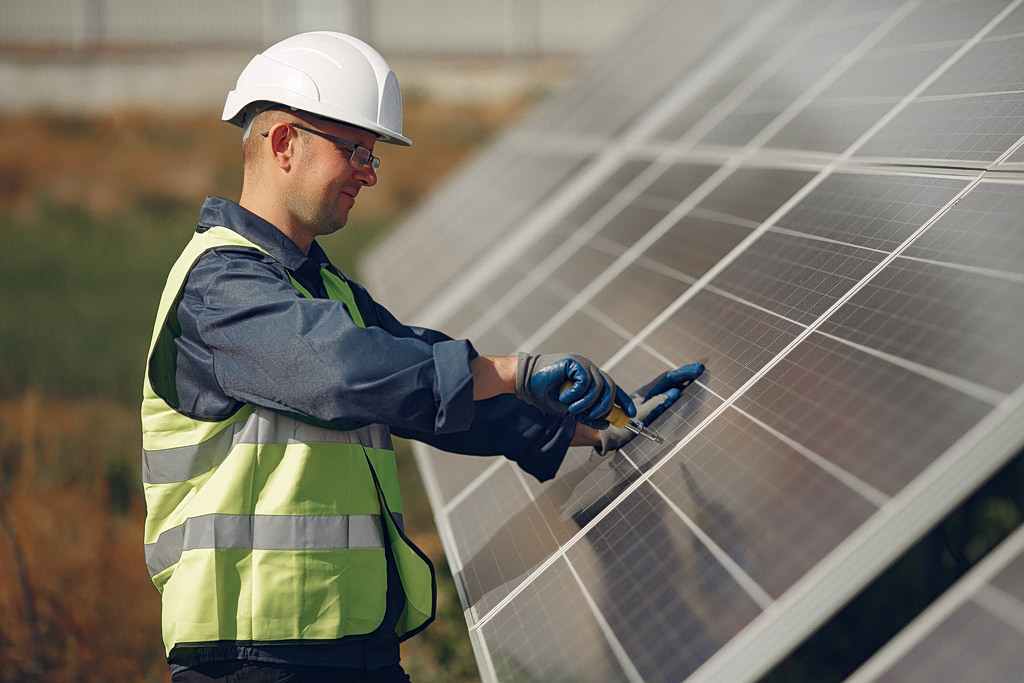



Greece is expanding options for households and businesses seeking to reduce their electricity costs through solar power and battery storage under a new framework adopted by the Ministry of Environment and Energy.
The ministerial decision, signed Monday, September 14, allows consumers to generate their own renewable electricity or store power when prices are lower and use it when electricity becomes more expensive.
The new rules also simplify procedures for installing small plug-in photovoltaic systems, commonly known as “balcony solar panels,” while introducing standalone battery storage systems that do not feed electricity into the grid.
Batteries without solar panels
The framework allows households, businesses and industries to install standalone energy storage systems without the ability to feed electricity into the grid.
Consumers with dynamic, or “orange,” electricity tariffs will be able to charge their batteries during periods when electricity prices are lower and then use the stored energy when prices rise.
The provision creates an option for what the ministry describes as “self-generation” through storage for consumers who either do not have enough space to install solar panels or do not want to install them.
The battery inverter can have a capacity of up to 100% of the agreed power of the electricity connection.
To ensure that no electricity is fed into the grid, the system will require a dedicated sensor and a remote-metering system.
A bank guarantee will also be required for battery installation, with its amount linked to the nominal capacity of the inverter. Consumers connected to the low-voltage grid will be exempt from this requirement.
Simpler rules for balcony solar
The new framework also simplifies the installation of small plug-in photovoltaic systems that can be installed on balconies.
Under the new rules, these systems will no longer require a connection agreement, permit or connection fee. Instead, consumers will only need to notify the electricity grid operator.
The decision also establishes rules allowing batteries to be added to existing photovoltaic systems without requiring additional electrical capacity when a common inverter is used.
Faster grid connection procedures
The framework reduces the time available to the grid operator to respond to connection requests for self-consumption facilities from 15 days to five days.
It also establishes specific deadlines for carrying out the network upgrades required for connecting these systems.
The measures are intended to give households and businesses more ways to manage their electricity costs, either by producing renewable power themselves or by storing cheaper electricity for later use.
Source: tovima.com