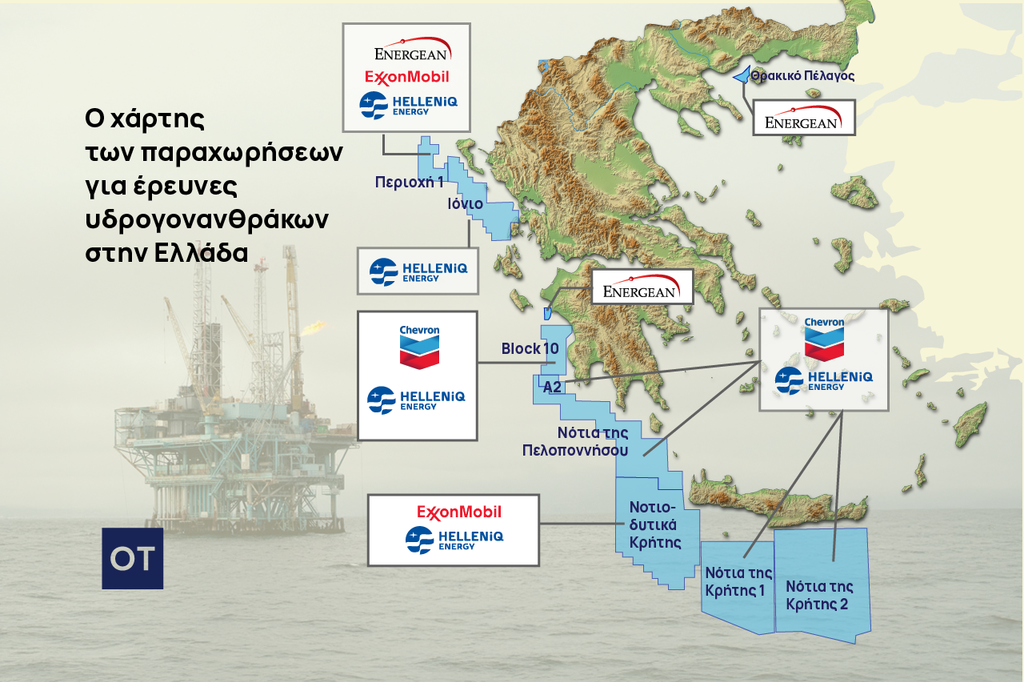




Greece’s first exploratory hydrocarbon drilling campaign in the offshore Block 2 concession in the northwestern Ionian Sea is entering a decisive new phase, as preparations gather pace ahead of the long-awaited operation.
According to reliable sources, the ExxonMobil–Energean–HelleniQ Energy consortium has completed the Environmental Impact Assessment (EIA), which is expected to be submitted to the Environmental Licensing Directorate of the Ministry of Environment and Energy later this month.
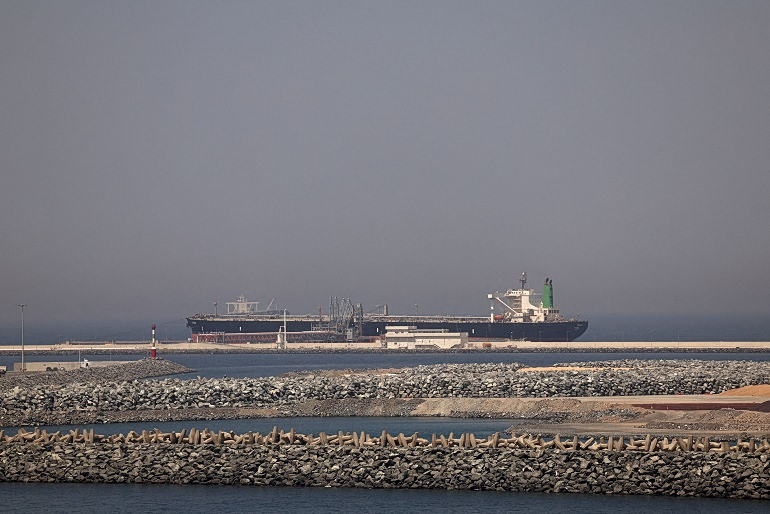
At the same time, the Port of Igoumenitsa has effectively been selected as the logistical hub for the drilling campaign. A formal agreement is expected to be signed in the coming weeks, before the environmental study is filed. Igoumenitsa had long been considered the leading candidate because of its proximity to Block 2 and its infrastructure, which is well suited to supporting offshore energy operations.
The drilling schedule remains firmly on track. Speaking at the 30th Economist Annual Government Roundtable, Energean Chief Executive Mathios Rigas confirmed that the consortium intends to begin drilling in February 2027. “Together with Exxon and with the support of the government, we will carry out the first drilling campaign in Greece after 40 years,” he said.
The exploration well will target the Asopos-1 prospect, identified through the interpretation of three-dimensional seismic data acquired in recent years. The well is planned to reach a total depth of approximately 4,622 metres beneath the seabed, while the drilling location lies in waters around 1,300-1,400 metres deep.
According to estimates presented by Energean, the Asopos structure could contain around 270 billion cubic metres of natural gas. Should drilling confirm these geological expectations, the discovery would rank among the most significant natural gas finds in the Eastern Mediterranean in recent years.
While Block 2 currently represents Greece’s most advanced offshore hydrocarbon exploration project, it is far from the only development in the country’s upstream sector. The recent signing of lease agreements with the Chevron–HelleniQ Energy consortium for the offshore areas Block A2, South of the Peloponnese, South of Crete 1 and South of Crete 2 has significantly broadened the scope of exploration activity, underscoring renewed momentum in Greece’s efforts to unlock its offshore energy potential.
Source: tovima.com