

Greece’s 2027 budget and four-year fiscal plan envisage permanent measures worth a total of 7.3 billion euros next year, rising to 11.45 billion euros by 2030, with provisions for wage and pension increases, tax relief, housing support and investment in energy infrastructure.
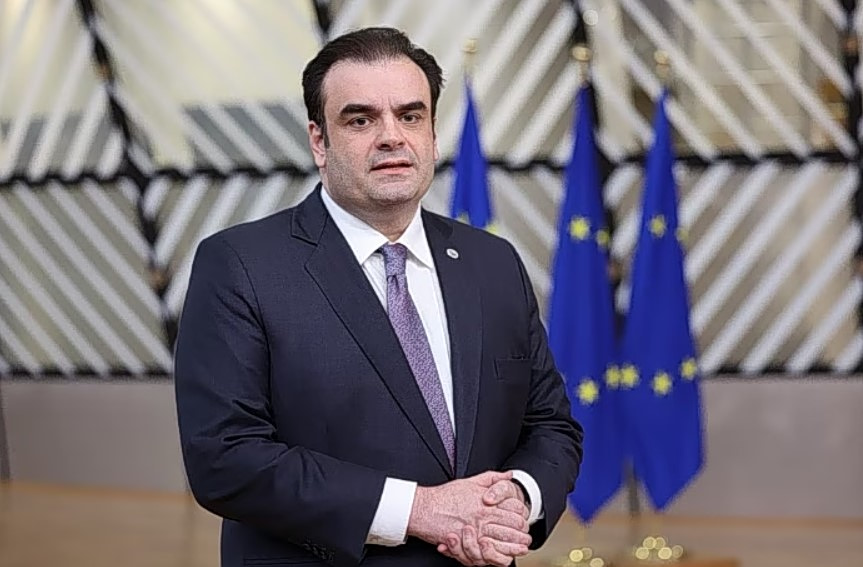
The budget and the multiannual fiscal planning framework for 2027-2030 were presented to the Cabinet on Wednesday by Economy and Finance Minister Kyriakos Pierrakakis and Deputy Minister Thanos Petralias.
The measures aim to increase disposable household income, stimulate public and private investment, address social challenges including housing and demographics, and strengthen the country’s energy autonomy.
The finance ministry estimates that newly introduced permanent measures will cost 2.28 billion euros in 2027, rising to 3.6 billion euros in 2030. The broader figures of 7.3 billion euros and 11.45 billion euros also include previously legislated measures and other fiscal interventions.
Wages and pensions
The government aims to raise the monthly minimum wage from its current 920 euros to 1,000 euros by January 2028, through two increases, in April 2027 and January 2028. The minimum wage, which stood at 650 euros in 2021, will thus have increased by 54%, while earnings including seniority increments will reach 1,300 euros.
The adjustment will also affect unemployment and maternity benefits, as well as overtime payments. Private-sector social security contributions will be reduced by 0.5 percentage points from April 2027, bringing the combined employee and employer rate to 34.66%.
A permanent Christmas bonus of 500 euros gross will be introduced for approximately 720,000 public-sector employees and officials from December 2027. The net payment is estimated at between 257 and 389 euros, depending on individual circumstances. The annual fiscal cost is estimated at 433 million euros. Public-sector basic salaries will also be adjusted in line with minimum-wage increases.
Pensions are due to rise by an estimated 2.9% from Jan. 1, 2027, without the personal-difference offset, at an estimated annual cost of 850 million euros.
Meanwhile, the annual financial allowance for pensioners will increase from 300 to 400 euros net from November 2026, extending eligibility to approximately 2.2 million people, including 270,000 additional beneficiaries. The measure will also cover people with disabilities regardless of age and uninsured elderly people. The 50% reduction in survivor pensions after the first three years will also be abolished.
Tax relief and business incentives
Self-employed professionals who comply with tax and digital reporting requirements will be exempt from certain surcharges on the minimum imputed-income system from the 2026 tax year. Eligibility requires full interconnection of point-of-sale terminals and cash registers, reporting through the myDATA platform, timely tax returns and no labor or tax violations over the previous five years.
The government also plans to abolish income tax on agricultural earnings of up to 20,000 euros for professional farmers from the 2026 tax year. The measure concerns approximately 47,000 farmers.
For families with three dependent children, the tax-free income threshold will rise to 25,364 euros from 14,364 euros, with the relevant tax rate reduced to zero on income up to 20,000 euros. The measure will benefit approximately 87,000 families.
The business levy will be abolished for legal entities in mainland Greece and Thessaloniki from 2027, benefiting approximately 122,000 businesses. In Attica, it will be reduced by half in 2028 and abolished in 2029. Advance corporate income tax payments will also be gradually reduced, while the rate for self-employed professionals will fall from 55% to 50%.
Housing and demographic measures
A new two-billion-euro My Home III program will provide low-interest mortgages for first-time homebuyers, with broader eligibility criteria. Single-parent families will receive an additional 5,000 euros in the income threshold for each child after the first.
Teachers, doctors and nurses serving in regional areas will also qualify for an annual benefit equivalent to the refund of two months’ rent.
The ENFIA property tax will be abolished from 2027 for primary residences in settlements with populations of up to 2,000, rising to 2,200 in western Macedonia and regional units bordering neighboring countries. Attica will be excluded, apart from its Islands regional unit. The exemption will cover 12,860 settlements and approximately 65,000 additional property owners.
A new investment account for children will also be introduced in 2027. Parents will be able to open accounts during the first two years after a child’s birth, with the state matching their contributions up to 1,200 euros annually until the child turns 18.
Energy and investment
The government is targeting a reduction of up to 30% in retail electricity prices between 2027 and 2029 through investments in renewable energy, storage capacity and electricity networks. The first tier of household public-service charges will be reduced by 50% from January 2027. The projected reduction is an estimate of the combined impact of the measures, not a blanket discount on electricity bills.
Planned programs include 200 million euros for renewable-energy storage batteries, another 200 million euros for heat pumps and solar water heaters, and energy upgrades for public buildings and schools.
Two new financing programmes for small and medium-sized enterprises, backed by 1.5 billion euros in Recovery Fund loan resources transferred to the Hellenic Development Bank, are expected to mobilize a total of 5 billion euros in lending with bank participation.
The fiscal framework also projects economic growth of 2.3% in 2027, a primary surplus of 3.2% of GDP and a reduction in public debt from an estimated 135.8% of GDP in 2026 to 128.5% in 2027. The debt ratio is projected to approach 110% by 2030.
Source: tovima.com