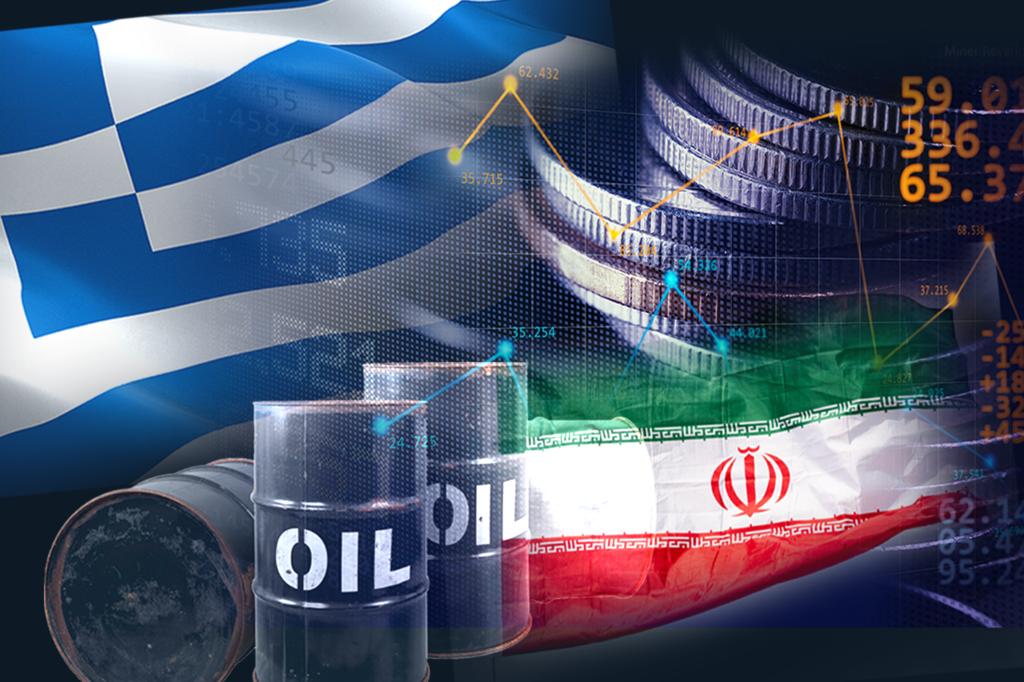


The Greek economy is entering a critical two-week period, with a series of key events and data releases expected to determine its trajectory in an increasingly uncertain global environment.
The timeline begins with the ongoing International Monetary Fund and World Bank Spring Meetings, where Greece’s finance minister is participating. Updated forecasts for both the global and Greek economies are expected, offering an early indication of the challenges ahead.
Key Dates That Will Shape the Outlook
Attention will shift next week to the release of official data by Eurostat between April 20 and 22, which will formally close the fiscal year for 2025. These figures will provide a clearer picture of tax revenues, public spending, the primary surplus, and public debt levels.
The final outcome will play a decisive role in determining whether additional economic measures will be introduced for 2026. Current indications suggest that new policies may be implemented sooner, as ongoing geopolitical tensions—particularly in the Middle East—are already impacting economic conditions.
Credit Ratings in Focus
Further pressure points come from upcoming credit rating reviews. Standard & Poor’s is expected to publish its assessment on April 24, followed by Fitch on May 8. These evaluations will be closely watched as indicators of market confidence and fiscal stability.
Strong Surplus, But Growing Risks
Preliminary data suggests that Greece’s primary surplus for the previous year reached approximately 4.5% of GDP, exceeding the official forecast of 3.7%. This stronger-than-expected performance is largely attributed to increased tax revenues, driven in part by efforts to combat tax evasion.
Both the IMF and the Bank of Greece have confirmed the overperformance, with estimates placing the surplus at around 4.4% of GDP. Projections for 2026 also remain above earlier targets.
Revised Forecasts Signal Slower Growth
Despite the positive fiscal results, the broader outlook is becoming more challenging. Authorities are expected to revise macroeconomic forecasts downward in the coming days.
Economic growth for 2026 is now estimated at around 2%, lower than earlier projections, while inflation is expected to rise close to 3% instead of declining. These adjustments reflect the impact of ongoing geopolitical tensions and disruptions in energy markets and global supply chains.
The revised projections are set to be formally submitted to the European Commission on April 30 as part of Greece’s medium-term fiscal plan.
Source: tovima.com









![Ακίνητα: Κύμα μεταβιβάσεων ενόψει του φόρου 15% [πίνακας]](https://www.ot.gr/wp-content/uploads/2026/07/akinita.png)