



This year’s Easter retail season unfolded under sustained pressure on household budgets, with consumer behavior increasingly shaped by rising prices and a cautious approach to spending. Despite tighter conditions, overall turnover for the short but intense holiday period remained broadly stable.
The concentrated Easter market, which typically spans 7–10 days and is boosted by seasonal income flows, including the Easter bonus in some markets, was estimated at around €1.5 billion. However, this stability in value was driven more by price increases than by volume growth.
Prices Support Turnover, Not Demand
While overall spending levels held steady compared with previous years, underlying consumption volumes are estimated to have fallen by 2–5%. In practical terms, consumers spent similar—or slightly higher—amounts of money but purchased fewer goods.
This divergence highlights the continued pressure on purchasing power, as inflation and cost-of-living constraints influenced buying decisions. Nevertheless, traditional Easter travel patterns remained resilient, with many households continuing to travel to visit family or take short holiday breaks.
More Price-Conscious Shoppers
Consumers were notably more focused on price comparisons and promotional offers. Many opted for lower-cost alternatives, including private-label products or switching retailers for everyday purchases. Supermarkets and discount stores strengthened their position in the market, largely due to their ability to maintain more competitive pricing.
A growing trend toward early purchasing was also recorded, as households sought to secure lower prices ahead of anticipated increases. Conversely, last-minute shoppers benefited from temporary price reductions on key Easter items, particularly meat and other fresh products.
Spending in non-food categories such as clothing, footwear, and gifts was more targeted and of lower value overall.
A Two-Speed Retail Market
The retail landscape showed clear signs of segmentation. Large retail chains attracted a wider consumer base through competitive pricing strategies, while traditional local shops—such as butchers, bakeries, and greengrocers—maintained higher price levels, relying more on loyal customers who prioritize product quality and origin.
Breakdown of Spending
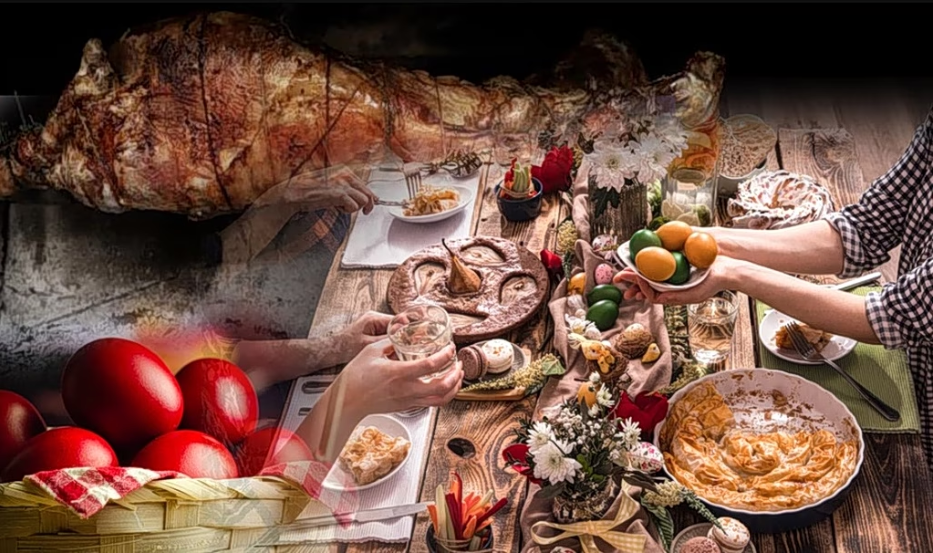
Food accounted for roughly 50% of total Easter turnover, amounting to approximately €750 million. Traditional gifts represented around 20% (€300 million), while clothing and footwear made up about 15% (€250 million). Domestic tourism contributed around 10% (over €150 million), with other categories accounting for the remaining 5%.
Overall, households also adjusted consumption patterns slightly, with smaller quantities purchased per family compared with previous years.
Inflation Shapes Consumer Choices
Inflation continued to play a decisive role in shaping purchasing decisions. Rising energy and transport costs were partially passed on to final prices, limiting consumer flexibility. Compared with last year, prices increased by around 12% for lamb, 10% for fresh produce, and between 5% and 8% for other traditional Easter food items.
Market in Transition
According to the President of the Piraeus Chamber of Commerce and Industry, Vassilis Korkidis, this year’s Easter market reflected a period of transition for retail. Businesses were required to balance price pressures with consumer expectations, while eight in ten shoppers adopted a more restrained approach to spending.
He noted that while consumption patterns have clearly shifted, traditional Easter customs and family-oriented spending—particularly on gifts for children and relatives—remained strong. Despite economic pressures, he added, cultural traditions continued to play a stabilizing role in household behavior during the holiday period.
Source: tovima.com








![Ακίνητα: Κύμα μεταβιβάσεων ενόψει του φόρου 15% [πίνακας]](https://www.ot.gr/wp-content/uploads/2026/07/akinita.png)