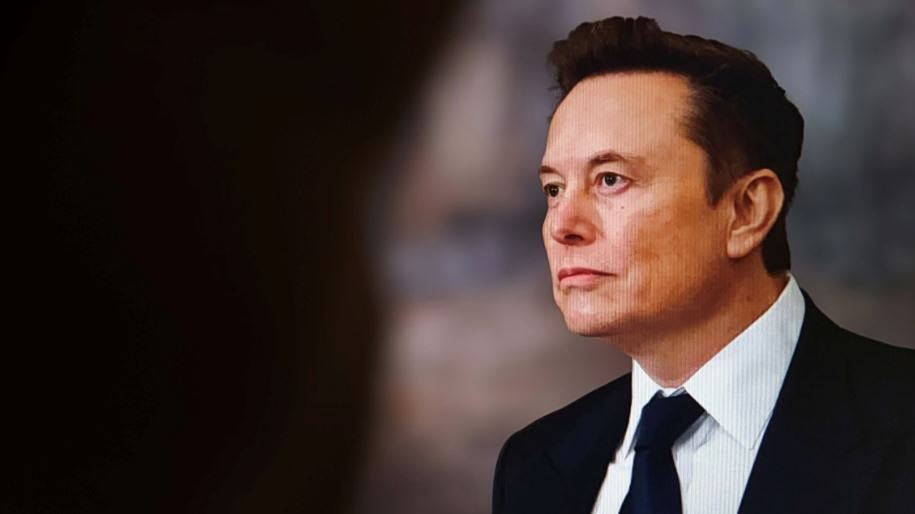

Elon Musk is once again contemplating a major merger within his portfolio of companies — this time between two of his largest: SpaceX and Tesla. For Tesla shareholders, however, this may not be welcome news.
According to CNBC, Musk has discussed with colleagues the possibility of merging the two companies, and Tesla employees say many expect the deal to “eventually happen,” with the topic being discussed openly internally. The two companies have already collaborated on various projects in the past.
“In our view, the odds are increasing that Tesla will ultimately merge in some form with SpaceX/xAI over time. The view is that this growing AI ecosystem will focus simultaneously on Space and Earth… and Musk will look to combine forces/technologies over time,” wrote Wedbush analyst Dan Ives in a note to clients earlier this year. It is worth noting that xAI, Musk’s artificial intelligence startup — which includes the Grok chatbot and X.com — merged with SpaceX in February. That deal valued xAI at $250 billion and SpaceX at $1 trillion.
In business circles, the “synergies” created when companies merge — such as shared resources and cost reductions ostensibly aimed at delivering better products and services — have become almost a cliché. In this particular case, however, despite the fact that the two companies already share resources and collaborate on projects such as the planned Terafab microchip plant and orbital data centers, such a merger would really come down to one thing: control, as Yahoo Finance notes.
Musk’s Absolute Control of SpaceX
According to SpaceX’s IPO prospectus, Musk already owns a large stake in SpaceX, and his super-voting shares make him effectively the sole decision-maker. His Class B shares carry 10 votes each. The 5.5 billion Class B shares he holds — representing 94% of all SpaceX Class B shares — give him effective control of 85% of the company.
With such sweeping control over SpaceX, and a roughly 20% stake in Tesla, Musk would essentially be negotiating with himself and could offer favorable terms that would allow him to maintain the same iron grip over the merged entity that he currently has over SpaceX.
Tesla investors would still have the ability to vote on such a merger. Musk holds a significant but not majority stake in Tesla, so shareholders could reject the deal if they dislike the terms. Whether that vote would serve as a meaningful check depends on how badly Tesla shareholders want a piece of SpaceX.
“SpaceX’s balance sheet means any merger will be a stock deal,” Michael Ewens of Columbia Business School, a specialist in corporate finance and private equity, told Yahoo Finance. “If it were cash, Tesla shareholders would have far less to worry about.” And stock deals carry their own weight when Musk sits on both sides of the table.
A Troubling Track Record
Musk’s history of merging companies he controls is somewhat concerning. Fred Lambert of Electrek, a longtime Musk observer and former Tesla shareholder, noted that these transactions have essentially been designed by Musk himself.
First came the bailout of SolarCity, a solar panel manufacturing and installation company of which Musk was chairman, and in which his cousins held senior positions. The near-bankrupt firm was acquired by Tesla for $2.6 billion in Tesla stock — effectively a rescue operation. Although Tesla still sells solar panels, that business has largely ground to a halt, according to Electrek.
The most striking example is perhaps Twitter, now X.com. Musk paid an exorbitant $44 billion for the company after being forced to complete the acquisition through a court process. His management and controversial statements on the platform destroyed its advertising revenues and value. He then had his own AI company, xAI, acquire X for $45 billion including debt — once again rescuing Musk and other X investors at the expense of xAI’s shareholders.
But don’t feel too sorry for xAI’s investors either. SpaceX subsequently acquired xAI, with Musk arguing that the two companies needed to merge to address issues around artificial intelligence and space-based data center development. The deal valued xAI at the staggering sum of $250 billion. It was yet another massive windfall for xAI investors — including Musk — paid for with the valuable and highly sought-after SpaceX shares.
Greater Concentration of Power
Despite the concerns, some shareholders might actually welcome a greater concentration of power in Musk’s hands. “Tesla shareholders might prefer a merger because then Musk’s attention wouldn’t be split between two companies. They wouldn’t need to worry about him allocating resources between the two,” Ann Lipton, a corporate governance professor at the University of Colorado, told Yahoo Finance. “They would lose control, but investors in Musk’s companies don’t seem to value that very much.”
So while a more focused Musk could be a positive, it could also come at a high price: dilution. In this case, that would mean existing Tesla shareholders seeing their real ownership stake shrink. “Dilution is an issue. If SpaceX acquires Tesla at a valuation of $2 trillion or more, it’s likely that Musk’s Tesla compensation package would entitle him to even more Tesla shares (which would become SpaceX shares in a merger),” Lipton added.
Tesla shares would then be converted into SpaceX shares at the merger ratio, meaning the stake of ordinary Tesla shareholders in the combined entity would contract.
It is not hard to see why Musk would want a merged entity, given the legal troubles he faces with some Tesla shareholders. Shareholder lawsuits over his compensation would essentially become a thing of the past, as SpaceX’s governance rules would take over. According to the prospectus, SpaceX does not require independent directors, does not need independent directors to set compensation, and any issues shareholders may have must be resolved through arbitration — which in most cases favors the party seeking arbitration.
“The long-term risks here are a more complex company with greater Musk control, more related-party exposure, weaker shareholder response mechanisms for minority shareholders, and dependence on the growth of SpaceX operations outside of Tesla,” Ewens of Columbia added. “That said, governance structures at SpaceX are similar to Tesla’s: Elon Musk is in control. Tesla shareholders have already accepted that deal.”
At present, a potential SpaceX-Tesla merger would effectively use SpaceX’s highly valued and sought-after shares to acquire Tesla — a profitable company that may nonetheless be on a declining trajectory as electric vehicle sales have stalled.
“He has a habit of merging a weaker company with a stronger one,” Lipton said. “I’m not sure that’s exactly the motivation behind a Tesla/SpaceX merger; it may be more about consolidating control of Tesla and avoiding the cost of managing two public companies.”
And of course, money is never irrelevant. Musk, already the world’s richest person, is expected to become a trillionaire if SpaceX achieves a specific valuation. The question is whether Tesla shareholders will benefit too — and if they have doubts, they may want to sell now. As Ewens warned, those who wait until after a potential merger could find themselves locked in or facing a share price drop in the aftermath of SpaceX’s IPO.
Source: tovima.com