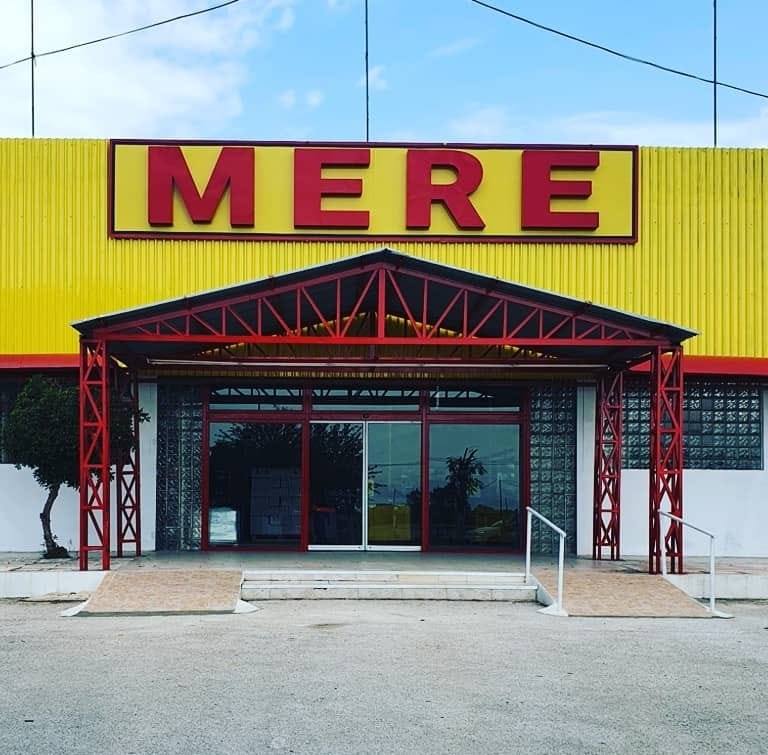
Τhe future of Russian discount supermarket chain MERE in Greece appears increasingly uncertain after the company abruptly closed its stores, with industry sources linking the move to the latest round of European Union sanctions targeting the chain’s ownership.
According to market sources, legal options are being explored that could allow the retailer to resume operations. However, executives in Greece’s supermarket sector believe finding a workable solution will be difficult.
The sudden closure marks an abrupt end to one of the few attempts by a Russian-owned retailer to establish a foothold in the Greek supermarket market.
Expansion Plans Fell Far Short
MERE entered Greece with an ambitious plan to open 80 hard-discount stores over five years.
Instead, the chain expanded slowly, ultimately reaching just 11 locations stretching from northern Greece to the northern Peloponnese.
The closure has also raised concerns for the company’s approximately 170 employees, whose jobs are now at risk unless the retailer succeeds in selling its Greek network, either store by store or as a single package.
Industry figures, however, consider such a sale uncertain because of the stores’ size and format. MERE’s outlets resembled warehouse-style facilities rather than conventional supermarkets, a model designed to reduce operating costs and offer lower prices.
Latest EU Sanctions
According to the report, the latest sanctions package adopted by the European Commission includes the Shnayder family, owners of the Russian supermarket chain, which is described as Russia’s fifth-largest food retailer.
The sanctions appear to have brought an end to MERE’s operations in Greece after about four and a half years, despite the company continuing to operate following Russia’s invasion of Ukraine in 2022.
From Siberia to International Expansion
The Shnayder family traces its business origins to Krasnoyarsk in Siberia during Russia’s post-Soviet transition.
The report says the family’s first business activities centered on the production and distribution of beverages before later shifting into food retail through the hard-discount model inspired by Germany’s Aldi.
That strategy fueled rapid growth, eventually earning the family a place on the Forbes list and helping build a network of more than 2,000 stores outside Russia.
Ukraine War Changed Expansion Plans
The report says Russia’s invasion of Ukraine dramatically altered MERE’s international expansion strategy.
The company abandoned plans to expand into the United Kingdom, while Greece has now become its second major setback abroad.
Source: tovima.com


![Τουρισμός: Σε ποιές περιοχές οι επισκέπτες ξοδεύουν περισσότερα [γράφημα]](https://www.ot.gr/wp-content/uploads/2024/03/fontana-di-trevi-1-300x300.jpg)





![Τουρισμός: Σε ποιές περιοχές οι επισκέπτες ξοδεύουν περισσότερα [γράφημα]](https://www.ot.gr/wp-content/uploads/2024/03/fontana-di-trevi-1.jpg)