

Greek Foreign Minister George Gerapetritis said Monday that Greece is prepared to respond to Turkish provocations “from a position of strength,” while insisting that Athens will continue maintaining open channels of communication with Ankara.
Speaking to Greek broadcaster OPEN, Gerapetritis said Greece was determined to defend its sovereign rights and, if necessary, respond “on the ground.”
“We remain vigilant, but we are not worried. And we are not worried because we have the strength to impose our national interests in any field,” he said, arguing that Greece is now in a significantly stronger diplomatic, economic and defense position.
‘Calm waters’ are not an end in themselves
Gerapetritis defended the government’s policy of maintaining relatively calm relations with Turkey, known in Greece as the policy of “calm waters.”
Asked whether recent Turkish moves marked the end of that period in the Aegean, he said de-escalation had never been an objective in itself, but rather a means of establishing a functional relationship between the two countries.
Greece, he said, would continue talking with Turkey because “with every neighbor, we have a duty to communicate.” At the same time, he stressed that “calm waters in no way mean that we have retreated from any of our fundamental national positions.”
According to Gerapetritis, the major change in recent years is that Athens now has the initiative and Ankara is responding to Greek initiatives.
He cited Greece’s maritime spatial planning, marine parks, the exploitation of underwater resources, the strengthening of the country’s international alliances and the expansion of its diplomatic footprint.
Turkey’s positions, he said, are not new, referring to its “Blue Homeland” doctrine, demands concerning the demilitarization of Greek islands and claims involving “gray zones.”
“The new developments are being introduced by the Greek state today,” he said, arguing that Greek initiatives are now prompting reactions from Ankara.
‘We will respond from a position of strength’
Asked how Athens would respond to Turkish provocations and whether high-level contacts would continue, Gerapetritis said Greece would take “all those measures that are necessary.”
“We will respond to the provocations, and we will respond from a position of strength,” he said, while emphasizing that communication channels with Turkey would remain open.
He also pointed to a reduction in violations compared with previous periods, as well as a decline in migrant flows toward the islands of the eastern Aegean. He acknowledged, however, that Turkey continues to take provocative actions, which he said are being condemned and addressed.
The foreign minister also warned that cutting communication channels could prove dangerous, particularly amid the current period of intense geopolitical instability.
Kasos and Greece’s sovereign rights
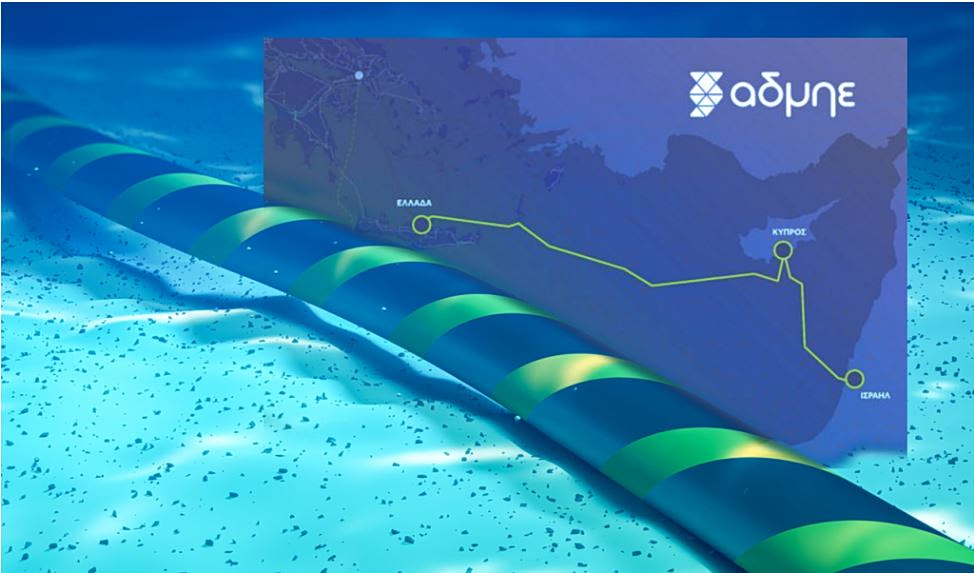
Gerapetritis was repeatedly asked about the possibility that Turkey could attempt to obstruct research or the laying of a cable in the area around Kasos, a Greek island in the southeastern Aegean.
“It is self-evident that Greece will fully exercise its sovereign rights. And today more than ever,” he said.
Asked whether this could involve the deployment of Greek warships and aircraft, he said Greece had demonstrated that it could send “frigates and F-16s” wherever necessary.
“Yes, if necessary, there will of course be a frigate and there will also be the upgraded F-16s,” he said.
Gerapetritis linked Greece’s deterrence capabilities to the strengthening of its armed forces, saying the country’s current position could not be compared with that of seven years ago.
‘Greece no longer watches, Greece acts’
The foreign minister used particularly strong language to describe what he said was Athens’ current strategy.
“Greece no longer watches, Greece acts,” he said, adding that “the era of inaction for Greece has definitively passed.”
Addressing those calling for a tougher stance toward Turkey, he said: “For those who want a tougher stance, let them hold their breath for a little while.”
Gerapetritis said Greece has “an entire menu of options” in its foreign policy and has already demonstrated that it can exercise its sovereign rights on the ground.
Government criticism of opposition
Gerapetritis also responded to criticism from the opposition PASOK party over the government’s response to recent Turkish moves.
He described as “irresponsible” a position that, in his view, “either indicates ignorance or carelessness.” He said the Greek government had already officially informed European authorities about Turkish actions.
He added that “the necessary démarches” and official statements would follow in the coming days at the EU Foreign Affairs Council.
Response to former prime ministers
The foreign minister also addressed criticism of the “calm waters” policy from former Greek prime ministers Antonis Samaras and Costas Karamanlis.
Regarding Samaras, Gerapetritis said Turkey had not created any fait accompli and could not do so. He also noted that Samaras had held talks with Turkish President Recep Tayyip Erdogan and the Turkish government while he was prime minister.
Gerapetritis rejected the argument that the “calm waters” policy had effectively rehabilitated Turkey internationally.
“Was Turkey rehabilitated and did it enter SAFE? The answer is no. Was Turkey rehabilitated and did it enter the F-35s? The answer is no,” he said.
He argued that over the past three years Greece had used the period of de-escalation to strengthen its international and defense position, pointing to its participation in the F-35 program, the delivery of new frigates, the strengthening of the economy and Greece’s presence in international organizations.
F-35s and Greece’s concerns
On the possibility of Turkey acquiring F-35 fighter jets, Gerapetritis said Greece could not determine the defense agreements of other countries.
He recalled, however, that seven years ago Turkey was participating as a co-producer in the F-35 program while Greece was outside it. Today, he said, the situation has been reversed.
Within the framework of the strategic relationship between Athens and Washington, the Greek government considers it a given that “Greek sensitivities will always be taken into account,” Gerapetritis said. He added that Greece communicates those concerns to the U.S. side at every level.
Patriot system in Saudi Arabia
Gerapetritis was also asked whether Greece could bring back the Patriot missile battery currently deployed in Saudi Arabia and whether such a move could be linked to closer relations between Riyadh, Ankara and Islamabad.
He stressed that the strategic relationship between Greece and Saudi Arabia had developed significantly in recent years and was “above and beyond any circumstantial situation.”
He made clear, however, that the decision to keep the Patriot battery in Saudi Arabia or return it to Greece would be operational.
“If we judge that it is necessary for the battery to return to Greece, we will do so. If we judge that our needs require it to remain there — geopolitical, diplomatic and operational needs — it will remain there,” he said.
Gerapetritis’ overall message to Ankara was that Greece does not intend to abandon dialogue, but will not leave any challenge to its sovereign rights unanswered. Athens, he said, will maintain open communication channels, continue its own initiatives and, if necessary, respond “on the ground” from a position of strength.
Source: tovima.com