
More than a century after the entire region was swept up in the turmoil of World War I, nearly 50 priceless religious artifacts that had long been separated from the places of worship for which they were created are being repatriated to a handful of monasteries in northern Greece.
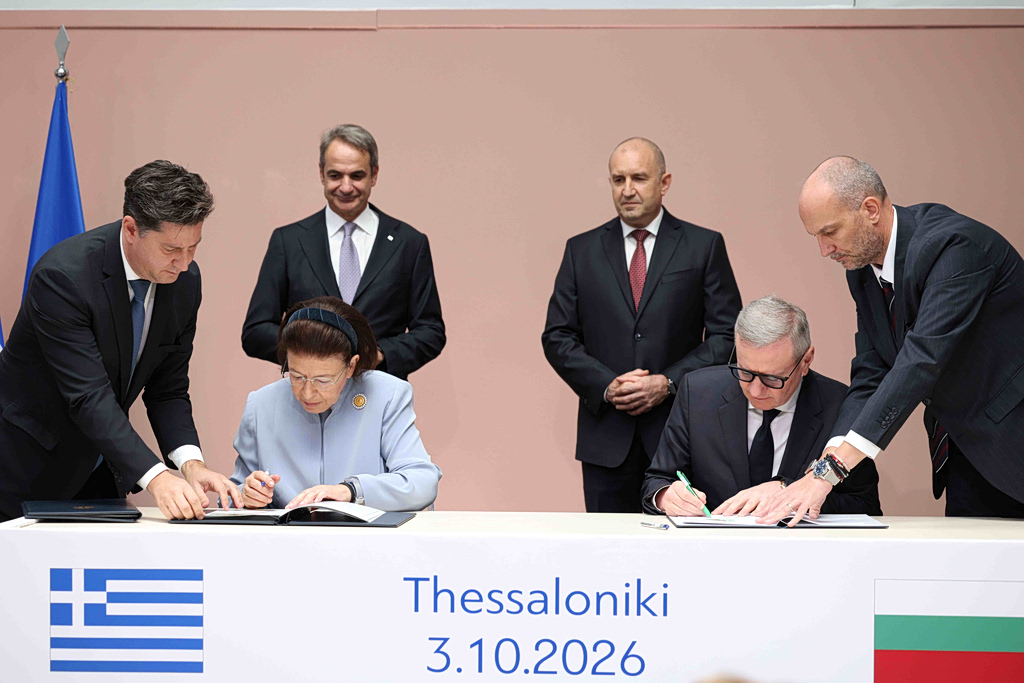
At the Museum of Byzantine Culture in Thessaloniki on Saturday, Greece and Bulgaria formally sealed an agreement for the reciprocal return of the ecclesiastical relics, completing a process that began almost half a century ago and placing cultural heritage at the center of a renewed relationship between the two neighboring countries.
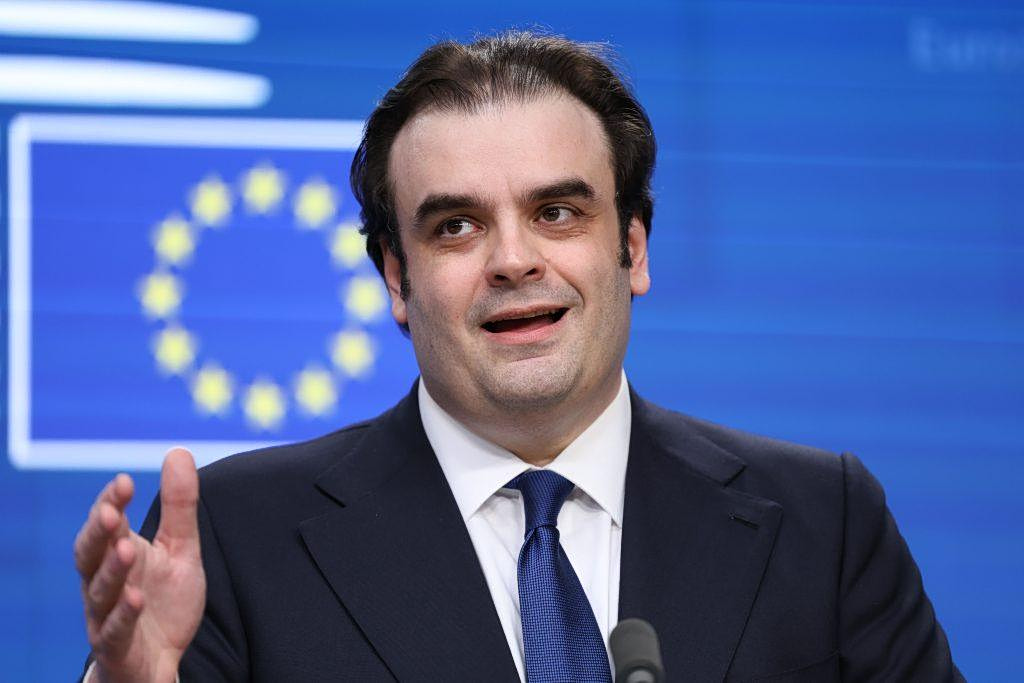
Greek Prime Minister Kyriakos Mitsotakis, speaking alongside Bulgarian Prime Minister Rumen Radev at a signing ceremony, described the agreement as something “much deeper than a simple cultural exchange,” saying the repatriation of important objects of collective memory could turn difficult moments of the past into “bridges” toward a shared future.
The centerpiece for Greece is the return of 48 ecclesiastical treasures, including icons, crosses, vestments, reliquaries and an intricately wood-carved episcopal throne. The objects were removed by Bulgarian troops in 1917, during the late stages of World War I, from the Holy Metropolis of Serres and Nigrita and the monasteries of Timios Prodromos and Panagia Eikosifoinissa. Bulgaria fought with the Central Powers in WWI, while Greece entered the Great War in 1917 on the side of the eventually victorious Entente.
They will be exhibited at the Museum of Byzantine Culture until Nov. 5 before returning to their historic places of origin. The arrangement follows years of negotiations and a memorandum of understanding signed last week by the Greek and Bulgarian culture ministers, Lina Mendoni and Evtim Miloshev.
Tsar Samuel Association
In return, Greece is handing Bulgaria the remains believed to belong to medieval Bulgarian Tsar Samuel, who ruled from 997 to 1014, along with anthropological material from four sarcophagi excavated at the Basilica of the St. Achilles chapel in the Prespa lakes area of extreme northern Greece. The remains had been kept for decades by the Greek state at the Byzantine Museum.
The symbolism of the exchange was difficult to miss. As the Bulgarian side received the remains believed to be the medieval ruler who occupies a primary cornerstone of its national history, the Greek Orthodox ecclesiastical treasures were being prepared for their return to the communities and religious institutions from which they had been separated.
For Mitsotakis, the agreement also offered a broader lesson about how two neighboring countries can deal with a complicated shared past without erasing or glossing over its substance.
“We do not romanticize history, nor should we erase it,” he said, arguing instead that Greece and Bulgaria should learn from its darker chapters, while emphasizing their shared cultural and religious roots, mutual recognition and common future in a Europe of prosperity and development.
The negotiations date back to the far-off 1970s, when then-Greek Prime Minister Constantine Karamanlis began discussions with Bulgaria’s then-leader Todor Zhivkov. Decades passed before political will and a willingness to overcome what Mitsotakis called the “rigidities” of the past allowed the agreement to be completed.
The deal also reflects a broader emphasis by Greece in recent years on cultural diplomacy and the return of cultural property. To Vima reported this week that the Greek-Bulgarian arrangement provides for continued negotiations over other historically significant objects of mutual interest, leaving open the possibility of further repatriations.
That point was emphasized by Mitsotakis, who said Saturday’s agreement was only the first stage of what Greece hopes will become closer cooperation between the two countries over objects of interest to both sides. He cited the return of the so-called Fagan fragment from Sicily as another example of the approach, noting that the formula had been praised by UNESCO.
At the same time, the ceremony also provided Mitsotakis with an opportunity to revisit Greece’s standing position on one of the country’s most prominent cultural diplomacy issues, namely, a repatriation of the Parthenon Sculptures.
Reference to Parthenon Marbles
He linked the principle underlying the Greek-Bulgarian agreement — the integrity of a monument and the relationship between cultural objects and the places for which they were created — directly to Athens’ campaign for the reunification of the Parthenon Sculptures.
“The Parthenon is a unique and autonomous case,” Mitsotakis said, arguing that the issue cannot be confined to legal or technical questions because it concerns the restoration of the aesthetic and conceptual integrity of a universal and unified monument.
He reiterated that Greece would not accept an arrangement implying recognition of foreign sovereignty over the sculptures or one based on borrowing what Greece considers its own cultural treasures. Instead, he said, the issue had reached a point of “truth, reason, justice and morality.”
Radev
Radev, meanwhile, presented the Greek-Bulgarian agreement as evidence that the two countries had moved beyond the “shadows of the past” toward a relationship based on mutual respect and friendship. He said the two sides had developed a strong strategic partnership in recent decades, describing it as an axis of stability, security, prosperity and development.
The Bulgarian prime minister’s presence in Thessaloniki gave the ceremony a diplomatic dimension beyond the return of individual objects. With the two countries already cooperating closely on economic, political and cultural issues, the agreement was presented as another element in a relationship that both governments describe as strategic.
For Greece, however, the significance was ultimately tangible: icons, crosses, vestments, reliquaries and other sacred objects that had been removed in wartime will once again be seen in the country — and eventually in the monasteries and religious institutions to which they belong.
After 109 years, the journey home for the relics has finally begun.
Source: tovima.com







![Ενοίκια: Τι ακίνητα προτιμούν οι Ελληνες – Μικρά και 20ετίας [γραφήματα]](https://www.ot.gr/wp-content/uploads/2026/08/ot_enoikia-1024x682-1.png)