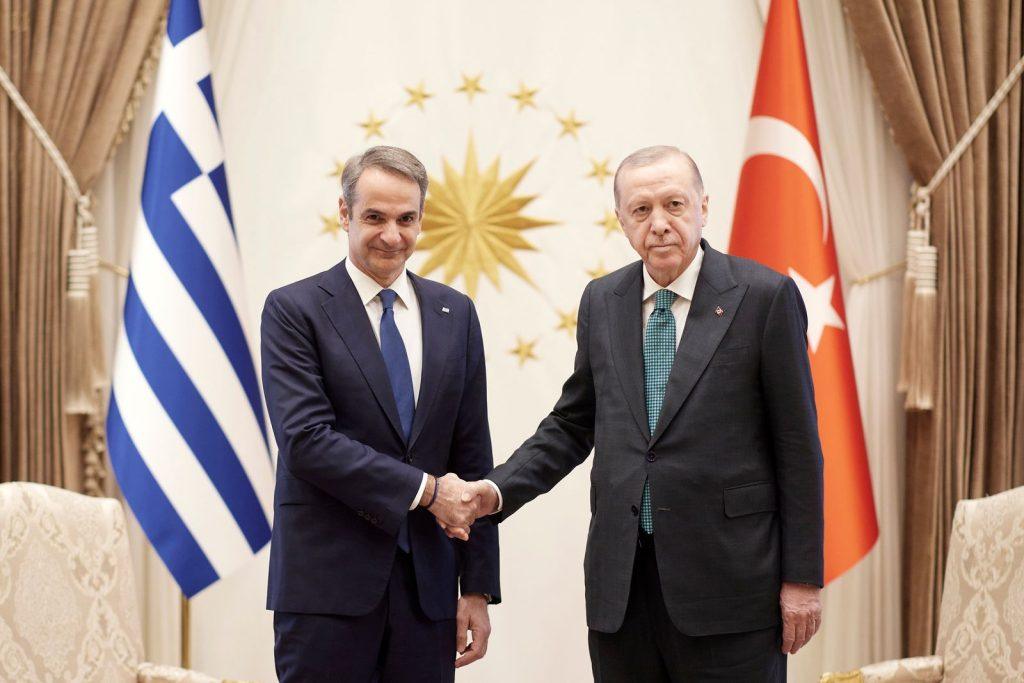



ho actually benefited from the Athens Declaration? Beyond historians of the future, who will be called upon to judge whether the “calm waters” policy paid off or cost Greece in its relationship with Turkey, the question has very immediate dimensions. Ankara’s decision to announce the introduction of a draft law that would formally enshrine Turkey’s longstanding revisionist positions on maritime zones in the Aegean and Eastern Mediterranean has triggered an unusual countdown: if this text is officially made public, expected sometime in the fall, and subsequently put to a vote in the Grand National Assembly, the “calm waters” era will likely become a thing of the past. And the Athens Declaration will be reduced to a dead letter.
“A great deal will depend on exactly what the law contains, but no one can say that the upcoming initiative is not an extremely serious development that will shake the bilateral relationship again,” a senior Greek government source told To Vima, without hedging. A return to tension looks increasingly like a self-fulfilling prophecy.
Accumulated Pressure
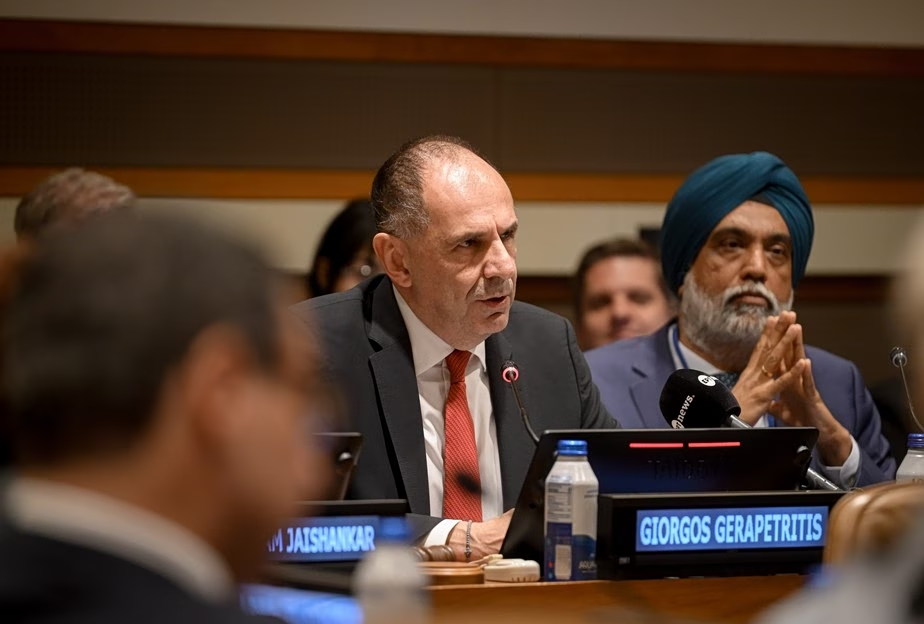
The most recent meeting between Greek and Turkish foreign ministers, Giorgos Gerapetritis and Hakan Fidan in Sofia on June 10, had something unusual about it: since the two men established their working channel of communication in mid-2023, following the re-election of both Mitsotakis and Erdogan, it was the coldest meeting they have had. Mutual suspicion across the Aegean is now openly visible, reflected in both rhetoric and on the ground. Exchanges of statements between the two capitals are multiplying, as are violations of Greek airspace.
“What is becoming increasingly clear is the accumulated pressure Turkey feels as a result of a series of Greek moves: the Maritime Spatial Planning framework, exclusion from European defense funding, the arming of the islands and Cyprus, and above all the strategic alliance with Israel,” a senior diplomatic source who has closely tracked the implementation of the Athens Declaration told To Vima. Under this reading, Ankara is having second thoughts about the whole policy and believes, to a considerable extent, that it was deceived.
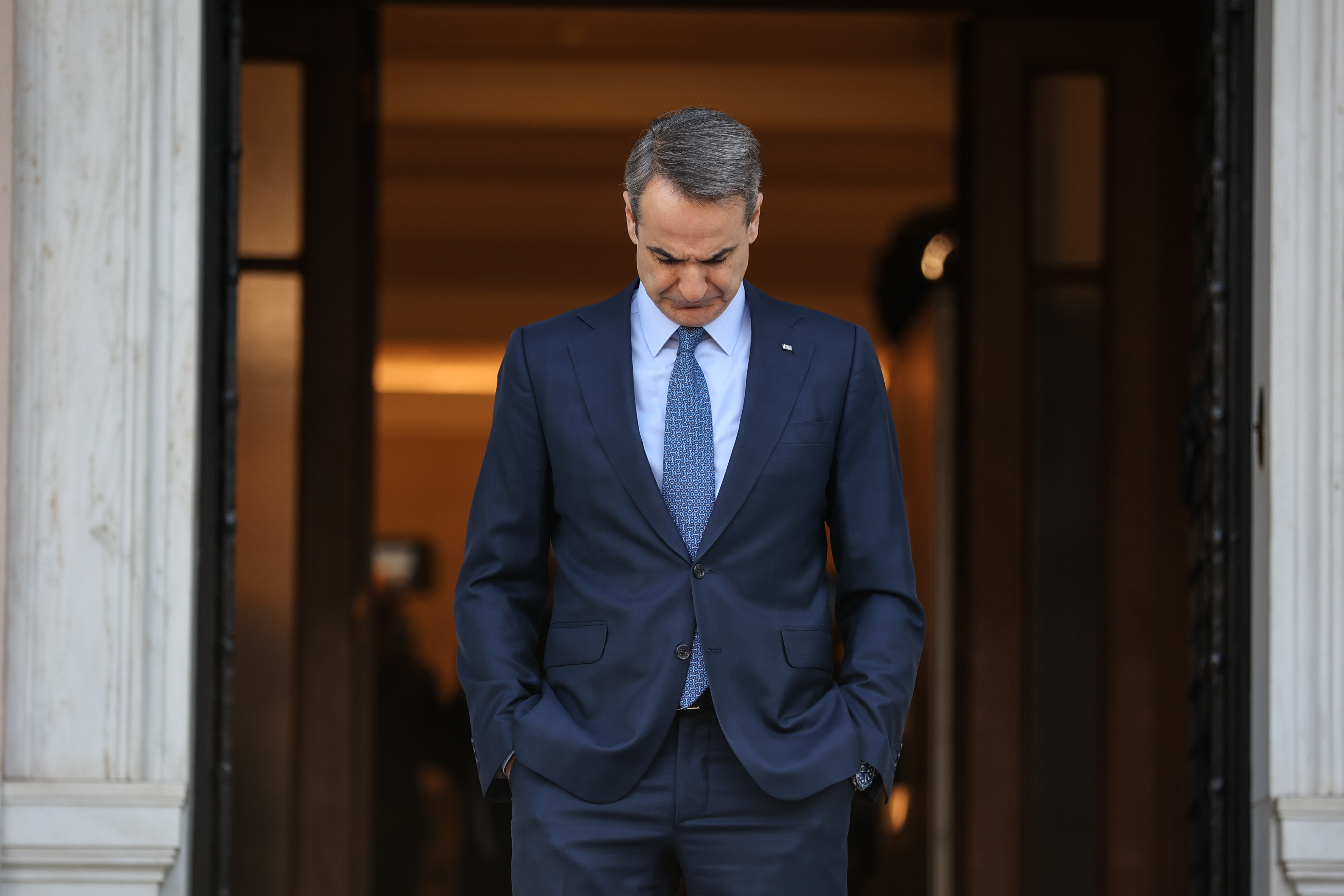
When asked in a recent television interview on ANT1 whether Erdogan had used the Athens Declaration only for as long as it suited him, Kyriakos Mitsotakis effectively confirmed the sentiment prevailing in the neighboring country: “Maybe the opposite is true?” Meanwhile in Turkey, a growing number of influential analysts, including Milliyet editor Ozay Sedir, are training their fire on Athens and equating the Greek government with Israel: “Neo-Ottomanism is an Israeli narrative, and Greece is following it.” Notably, many officials both at the Prime Minister’s office and at the Foreign Ministry are concerned about how the intense pressure building within the Turkish political leadership might find an outlet.
What the Bill May Contain
Much will depend on the content of the initiative. As officials familiar with the Foreign Ministry’s political leadership explain, if the bill amounts to a restatement in domestic law of Turkey’s existing positions on the extent of its continental shelf in the Aegean and its Exclusive Economic Zone in the Eastern Mediterranean, as previously laid out at the United Nations and in the map recently submitted to UNESCO, “the situation will remain manageable.” But if the bill includes provisions granting the Turkish president the authority to declare uses of maritime areas, such as fishing zones, then there is an immediate risk that tensions will shift from rhetoric to action on the ground.
It is precisely the enforcement of such a law that worries Athens, particularly since the military would be involved as guarantor of the legislation. A veteran New Democracy minister who regularly criticizes the government’s Turkey policy argues that the bill “directly threatens the sovereignty and sovereign rights of the country. It is the crowning expression of Ankara’s aggressive posture toward us: ‘You will not set foot beyond the 6 nautical miles in the Aegean.’”
Another source of concern in the Greek capital is the domestic political situation on both sides. Greece is already in an informal but extended pre-election period, while in Turkey the Kemalist opposition is being violently reorganized, with Erdogan watching for the right moment to either revise the constitution or find another means of renewing his presidential mandate. As is readily apparent, in the event of political upheaval, or even more so during periods of instability on both sides, both lines of communication and the capacity to de-escalate potential tensions become uncertain.
The International Context
The US-Iran agreement gives all regional players a chance to take stock of the new geopolitical landscape in relative calm. Since Turkey was unable to capitalize on its presence and influence in the Middle East, while watching Israel emerge as the dominant power in the broader region, many analysts believe Erdogan will seek to extend his country’s reach in the Eastern Mediterranean. And there, the obstacles are Tel Aviv and Athens.
“Turkey views the Middle East as exclusively its own privileged domain. So both Greece’s close cooperation with Israel and the broadening of its diplomatic footprint in the Gulf states are things that nearly infuriate Ankara,” a Greek diplomat with experience in several Arab countries noted. According to sources, during the Sofia meeting Gerapetritis was on the receiving end of Fidan’s frustration, particularly regarding Greek-Israeli relations.
On the other hand, none of the major players, with the United States foremost among them, would want to see a new flashpoint emerge, especially at the pivotal crossroads between West and East. This is also expected to be affirmed at the upcoming NATO Summit on July 7 and 8 in Ankara, where Turkey will aggressively seek a central role in the emerging European security architecture, a factor that in practice makes it more careful in its bilateral dealings with Greece.
Athens, for its part, is preparing its responses to the Turkish bill while staying in open contact with European partners. Under these circumstances, the possibility of a meeting, even a brief one, between Mitsotakis and Erdogan on the sidelines of the Summit remains open. Such a move might extend the “calm waters” period, but it would not change the hard reality of Greek-Turkish relations.
Source tovima.com